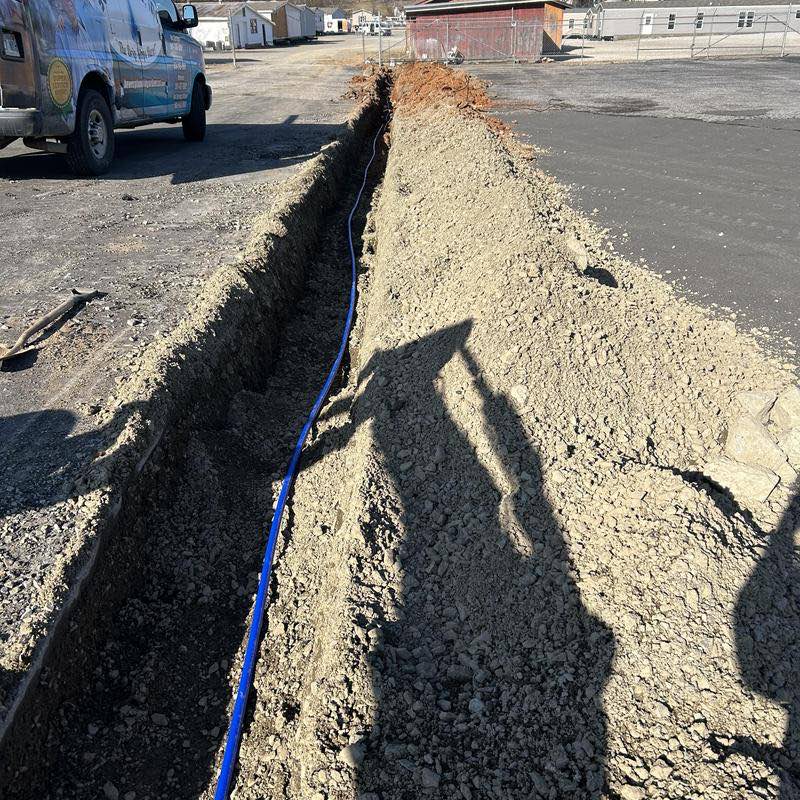
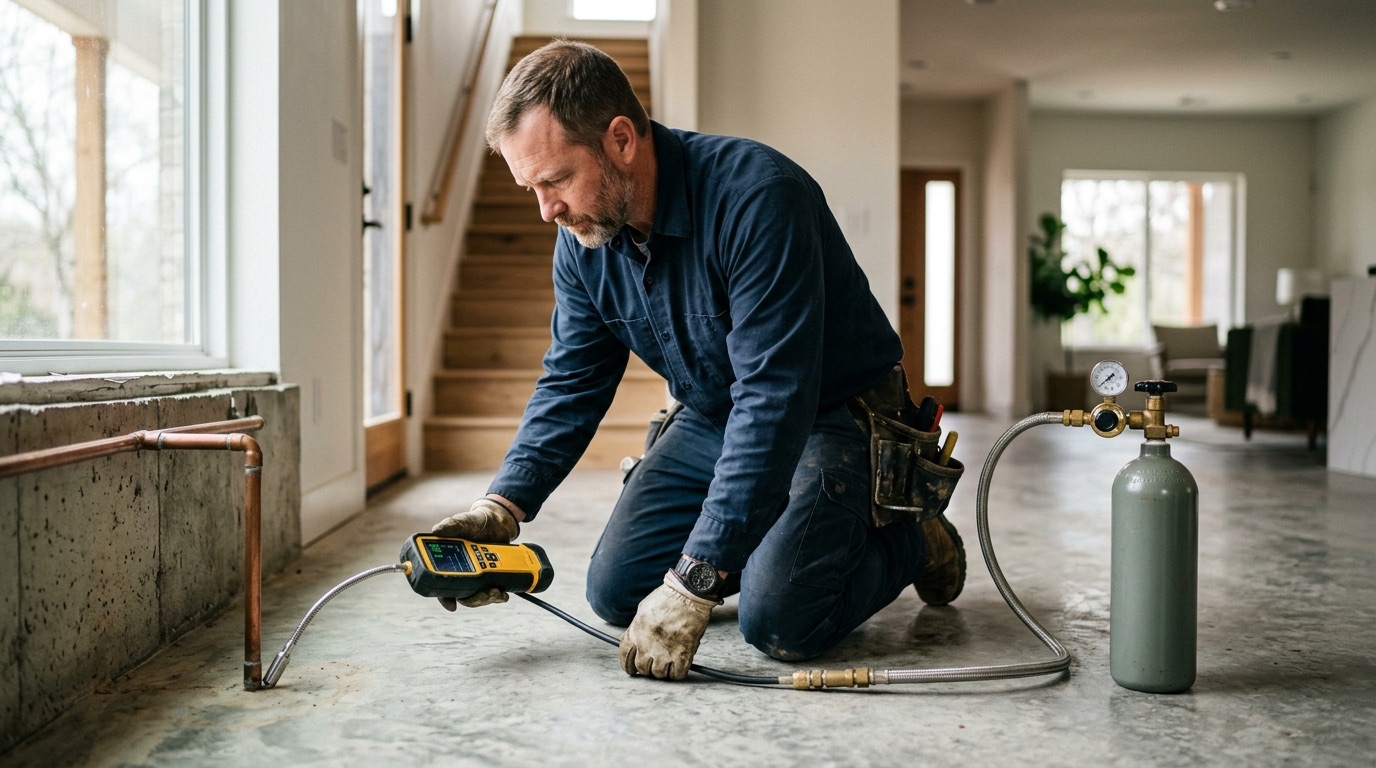
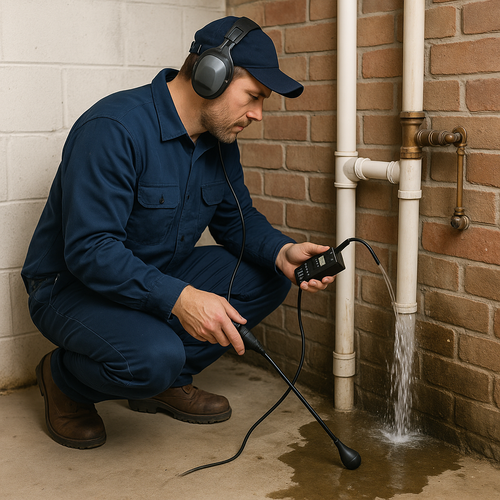
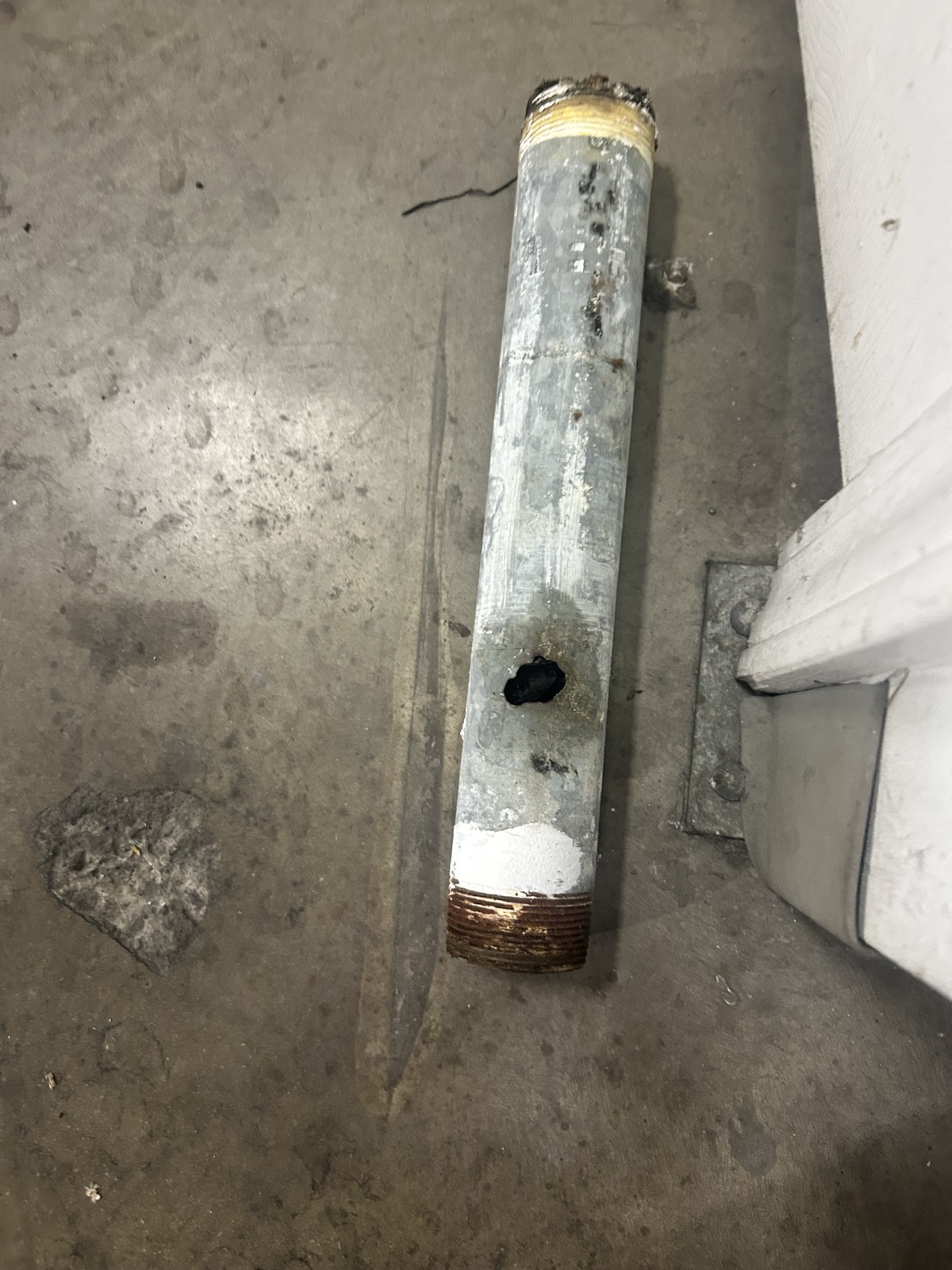
The tracer gas is 95% nitrogen and 5% hydrogen, an industry-standard mix that is non-toxic, non-flammable, and non-corrosive. Hydrogen is the smallest, lightest molecule there is, so it slips through a leak that barely drips and rises straight up through whatever is above it: soil, gravel, concrete slab, tile, hardwood, drywall, or a pool deck. Our Multi-Pro detector is sensitive enough to pick up trace amounts at the surface, and it alarms exactly where the concentration peaks. That peak is the leak, typically located within a foot or two even under a slab or several feet of soil.
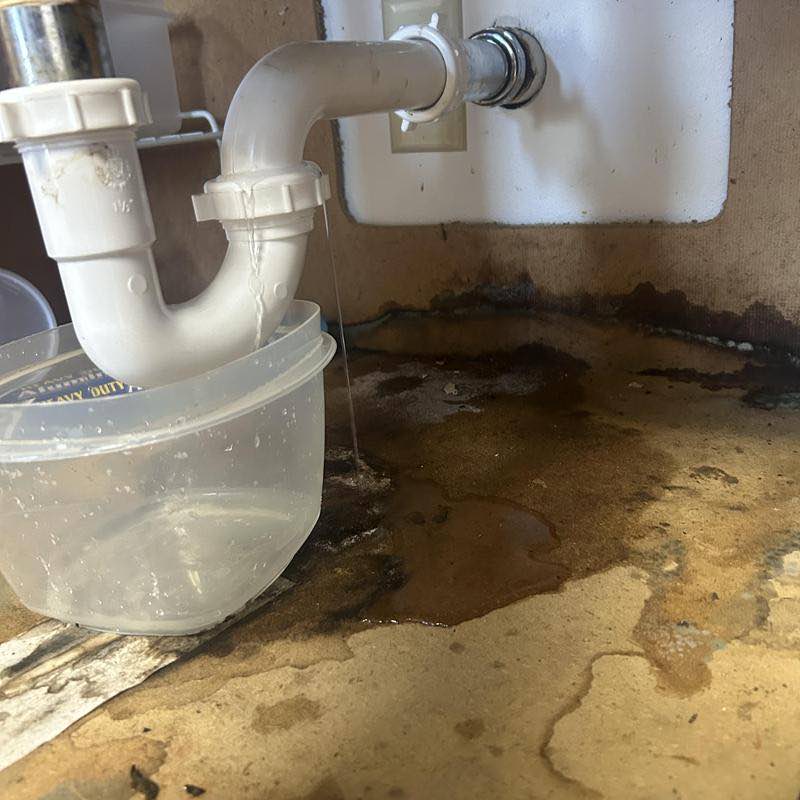
What’s included
- Safe, non-toxic, non-flammable hydrogen/nitrogen mix
- Finds silent leaks acoustic listening can miss
- Works through concrete, tile, soil, drywall, and pavement
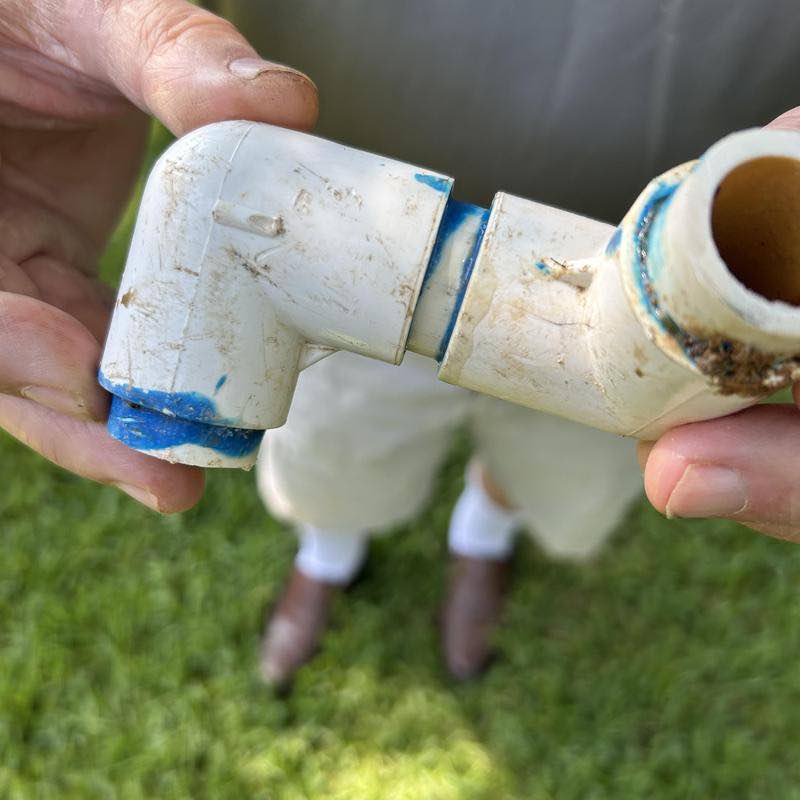
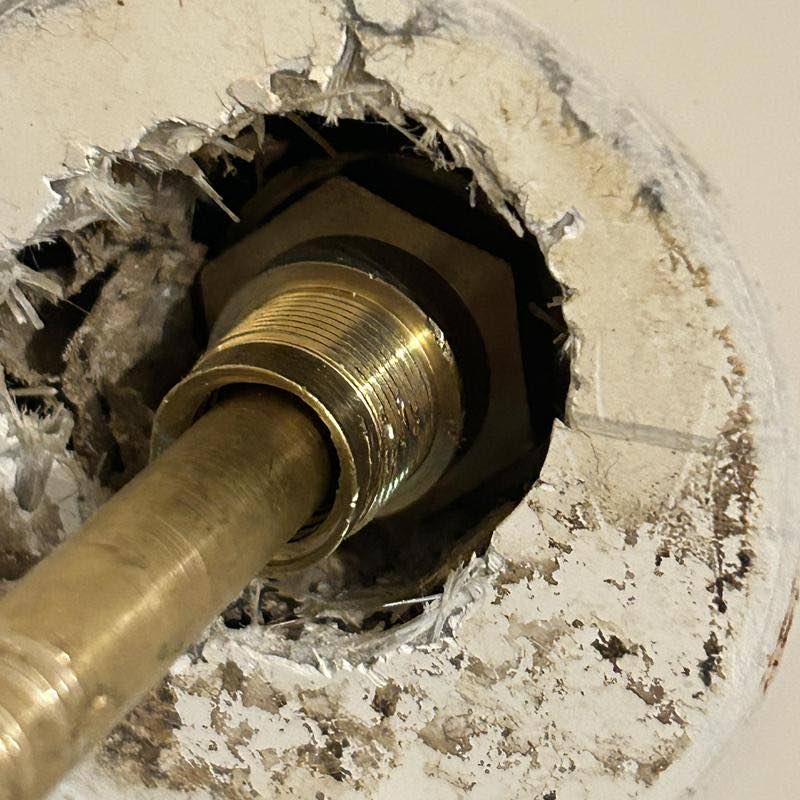
- Effective on copper, PEX, PVC, and poly lines
- Detection depth up to 10 feet underground
- Pinpoint accuracy means one small access opening
What a tracer gas leak detection visit looks like
Every job is a little different, but the process is consistent, and we walk you through each step.
- Confirm the leak with a meter check and pressure test, and narrow it to hot, cold, or a specific run
- Isolate and drain the suspect line, then connect the tracer gas at a regulated low pressure
- Sweep the surface along the pipe route with the detector, watching for the concentration peak
- Confirm with acoustic listening or moisture readings, then mark the spot
- Explain what we found and your repair options, and make the repair if you would like us to
- Flush the line and return the system to service
Where tracer gas makes the biggest difference
Slab leaks under thick concrete, deep service lines in wet clay, plastic pipe that does not carry sound, pool plumbing under a deck, and slow leaks inside finished walls are the situations where listening alone tends to fail and tracer gas shines. It is also the right tool when a leak is intermittent, because it relies on pressure rather than catching the leak in the act.