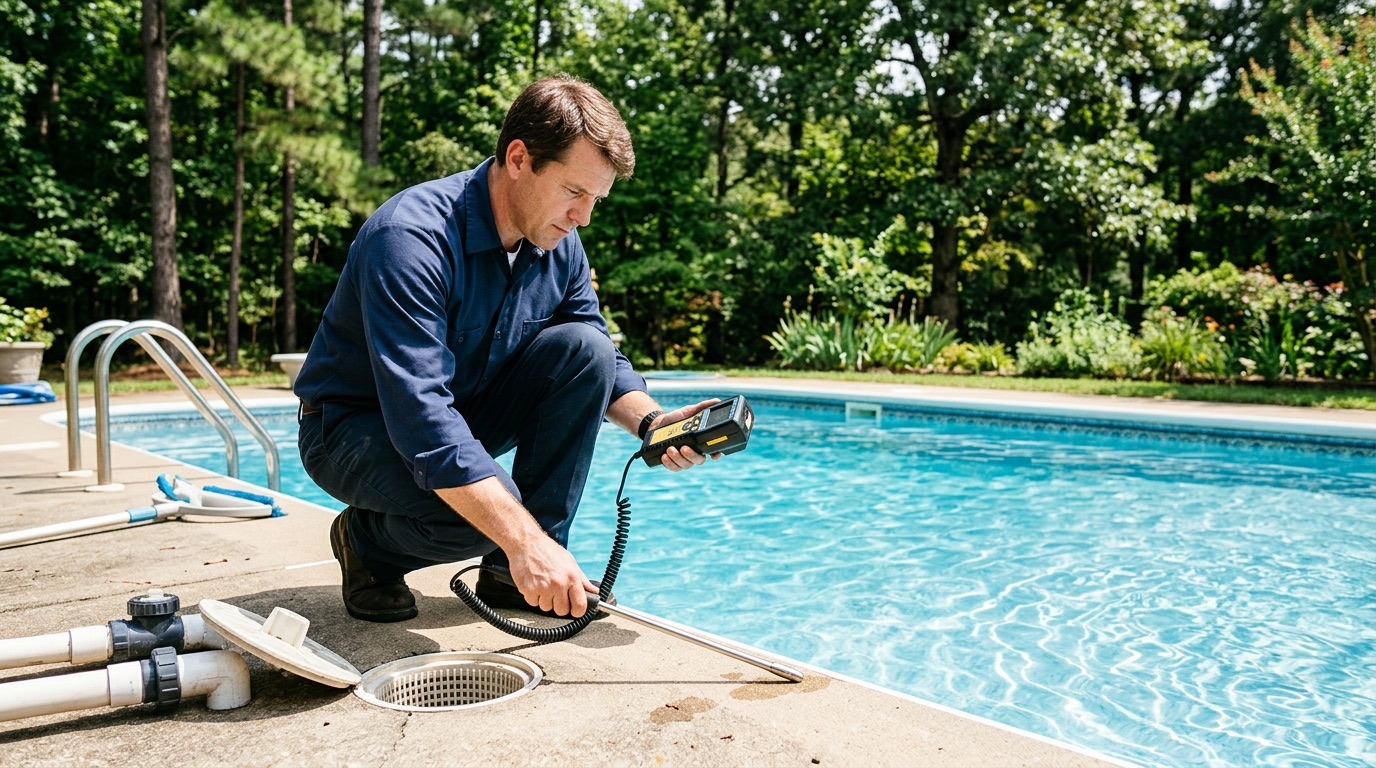
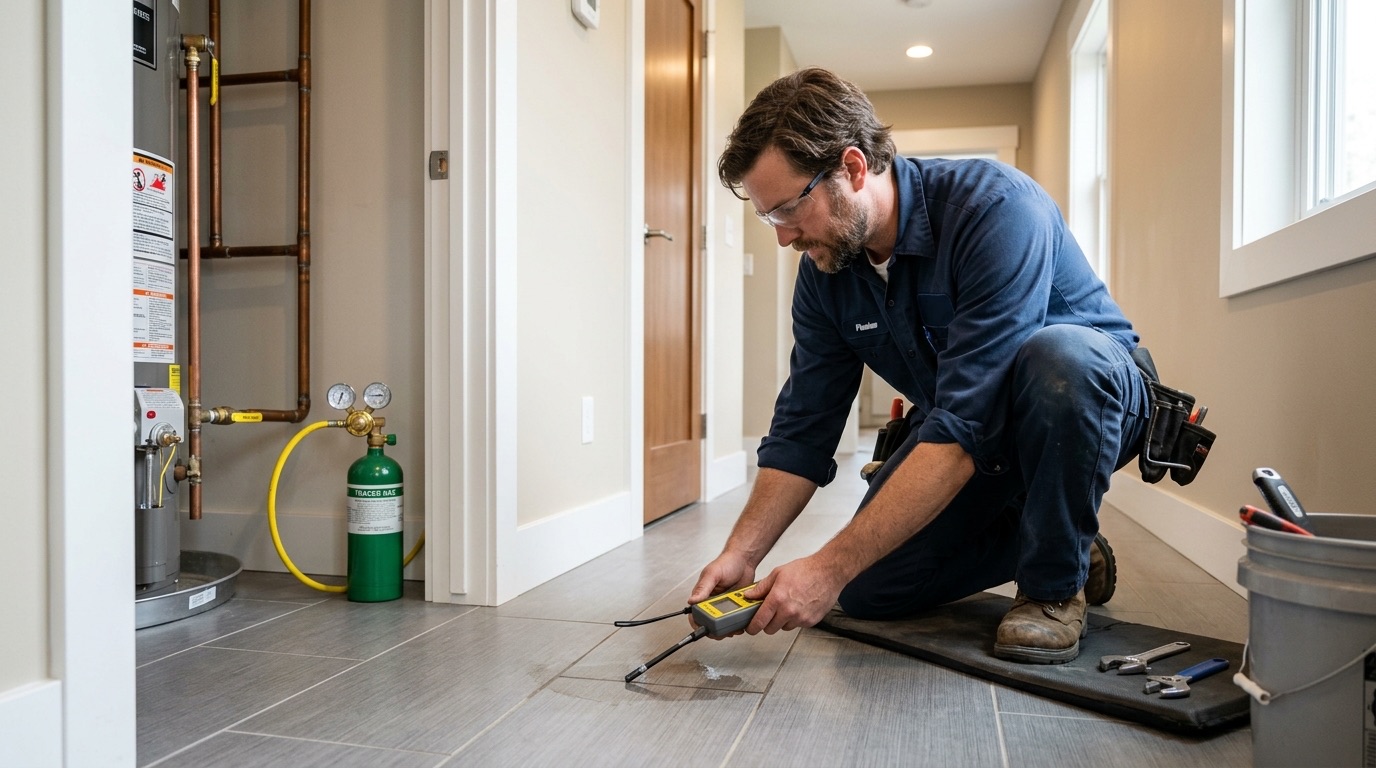
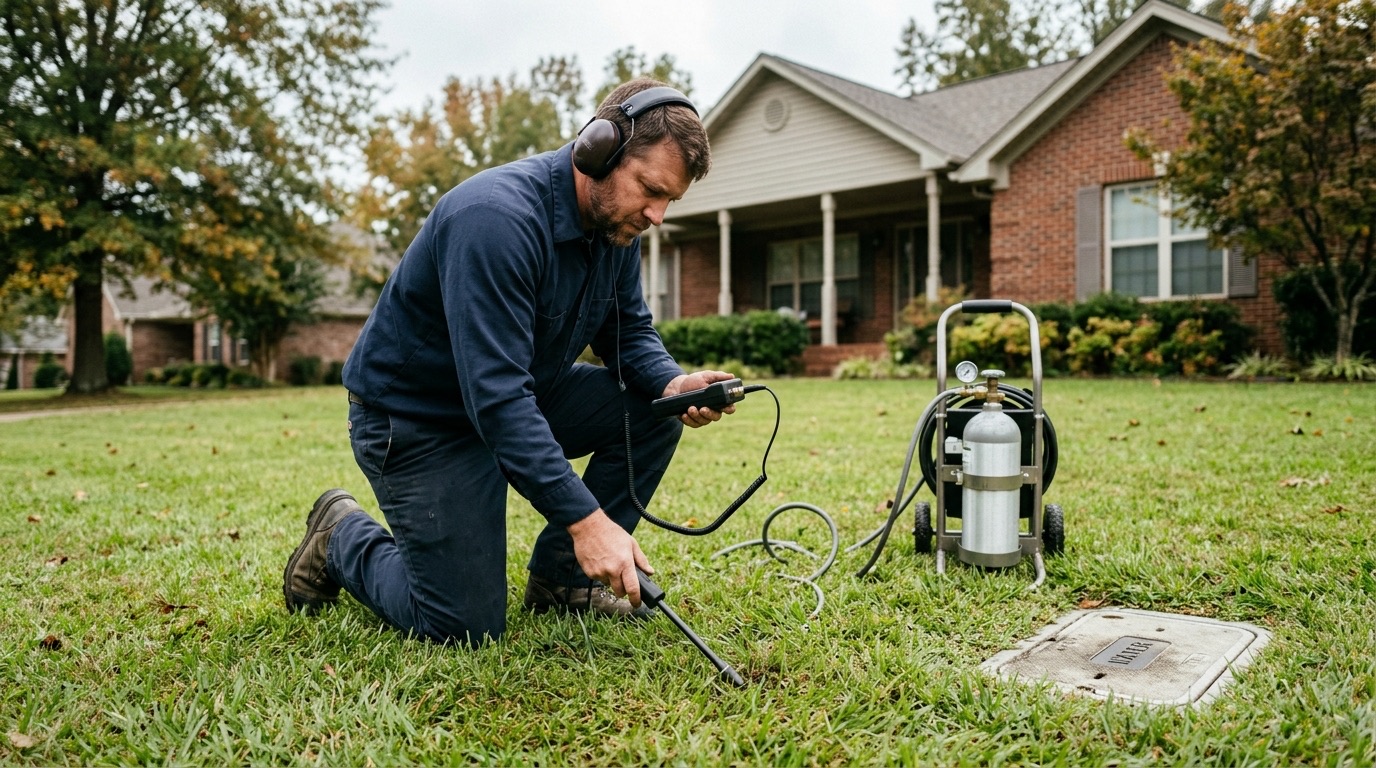
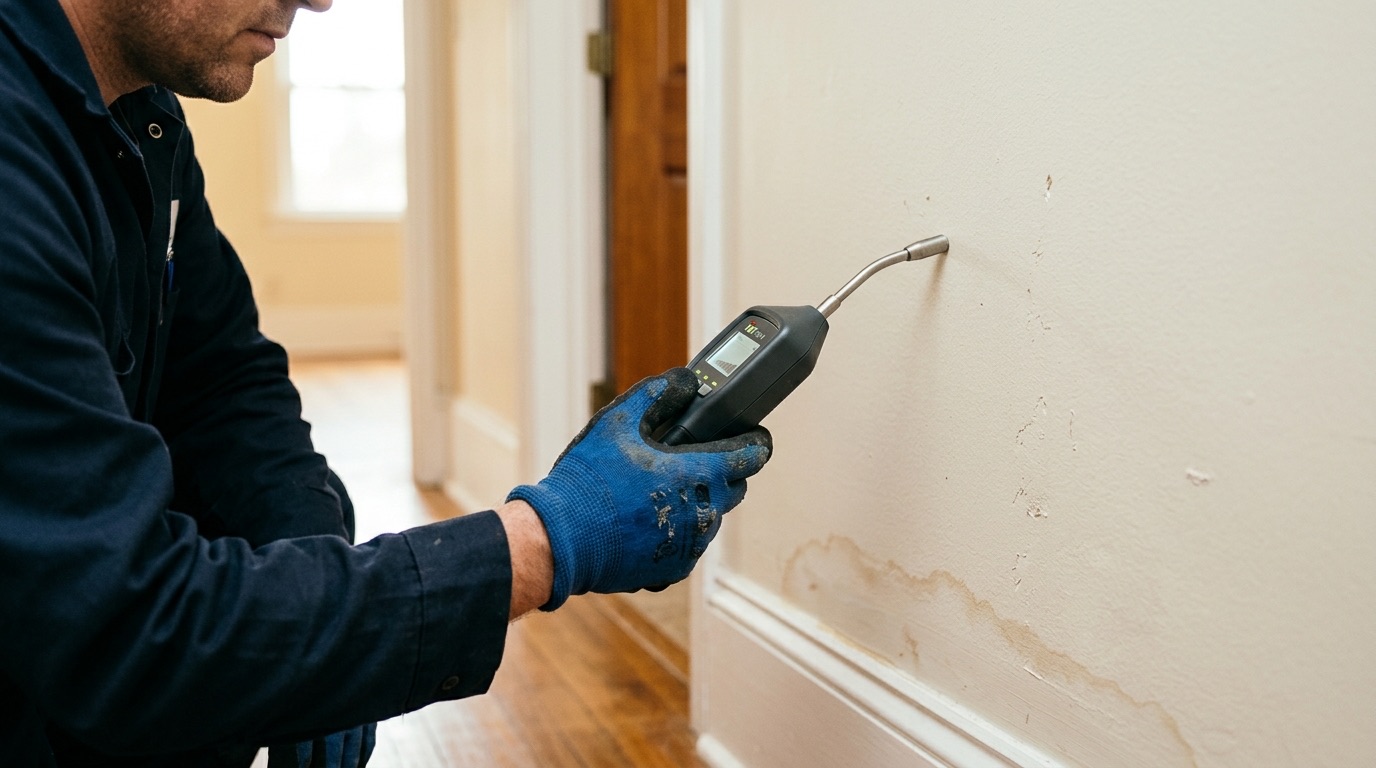
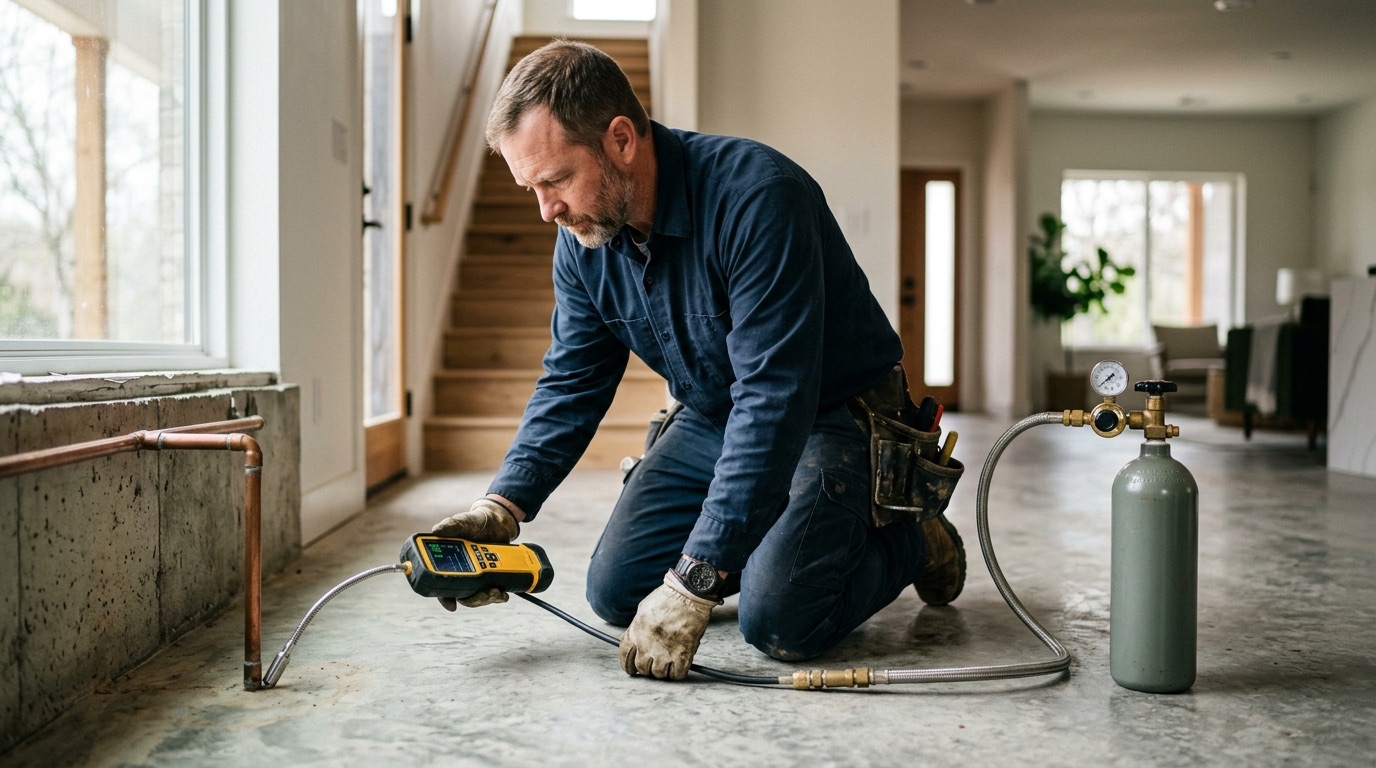
Here is how it works. We isolate the suspect line and pressurize it with a safe tracer gas, a 95% nitrogen / 5% hydrogen mix that is non-toxic and non-flammable. Hydrogen is the lightest gas there is, so it escapes through even a pinhole and rises straight up through soil, concrete, tile, and drywall. Our Multi-Pro detector sweeps the surface above the line and alarms exactly where the gas is surfacing. That is the leak. Combined with acoustic listening equipment and pressure testing, it turns a day of exploratory demolition into a marked spot on the floor.
David Bowen has been finding leaks in Hot Springs homes since 1985. The equipment is new; the honest approach is not. We tell you exactly what we found, where it is, and what it will take to fix it, then we handle the repair too if you want us to.
What’s included
- Tracer-gas (hydrogen/nitrogen) detection for pinpoint accuracy
- Pool and spa leaks, including plumbing under the deck
- Slab leaks under concrete, tile, and hardwood floors
- Leaks inside walls and ceilings without exploratory cutting
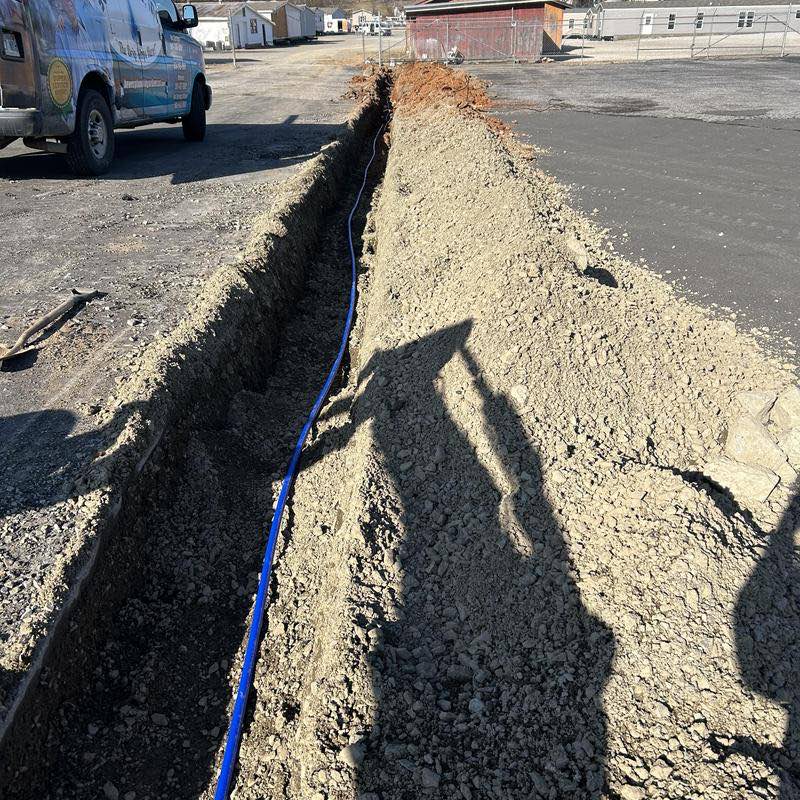
- Buried water and yard lines up to 10 feet deep
- Acoustic listening and pressure testing to confirm findings
- Marked location plus a written explanation of what we found
- Repair by the same licensed team, no second contractor needed
Explore leak detection
We handle every part of the job. Choose the service you need:
Why tracer gas finds leaks other methods miss
Acoustic detection listens for the sound of water escaping a pipe. It works well on pressurized metal lines close to the surface, but a slow leak in a PEX or PVC line, a leak under a thick slab, or a line buried deep in wet Arkansas clay can be nearly silent. Tracer gas does not need sound. If the line holds pressure and gas is getting out, the gas will find its way to the surface and our detector will find the gas.
That is why we use both. Pressure testing tells us whether a leak exists and roughly how bad it is. Acoustic gear gets us to the neighborhood. Tracer gas gets us to the exact square foot, so the repair is a small access hole instead of a trench across the yard or a hallway of ripped-up tile.
Signs you may need leak detection
Most hidden leaks announce themselves indirectly. If you notice any of the following at your Hot Springs area home or business, it is worth having us test the system before the damage spreads.
- Water bill climbing with no change in use
- Meter still spinning with every fixture off
- Warm or damp spots on floors, or buckling flooring
- Musty smell, soft drywall, or stains on walls and ceilings
- Soggy patch or unusually green strip in the yard
- Pool losing more than about a quarter inch a day
- Sound of running water when nothing is on
- Water pressure that has dropped for no clear reason