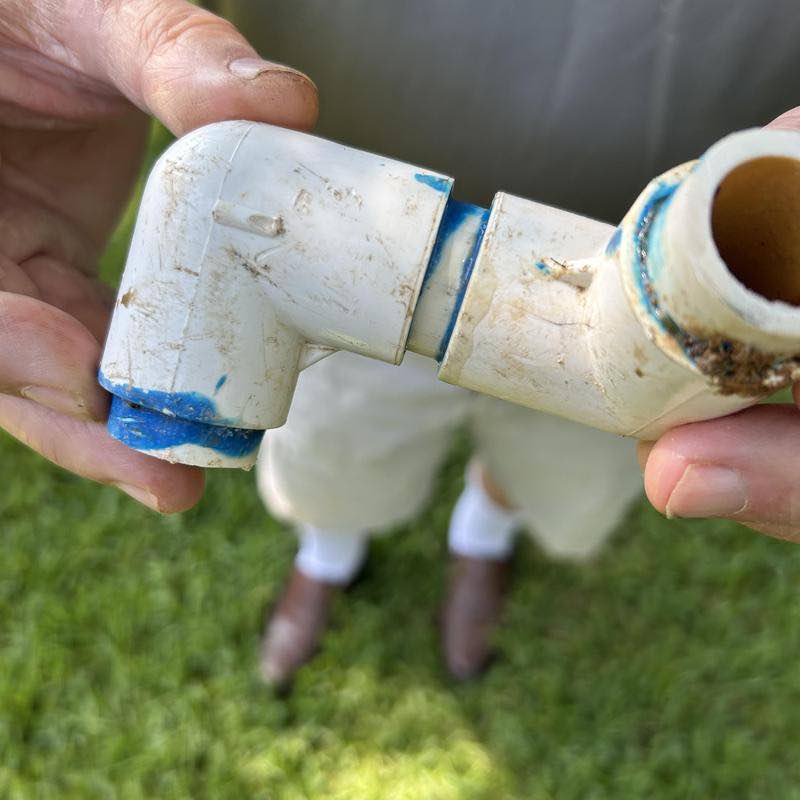
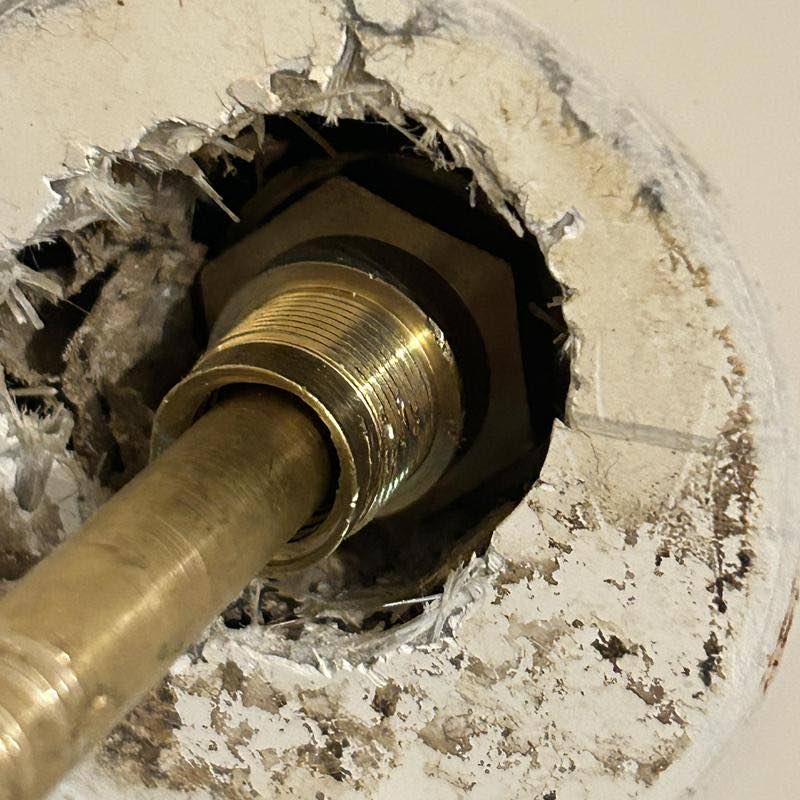
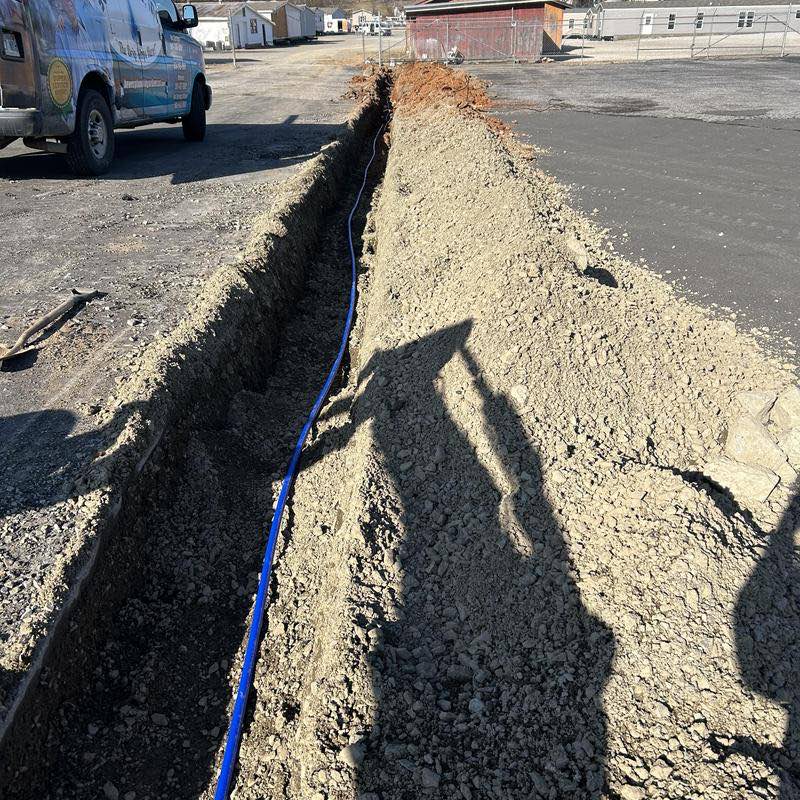
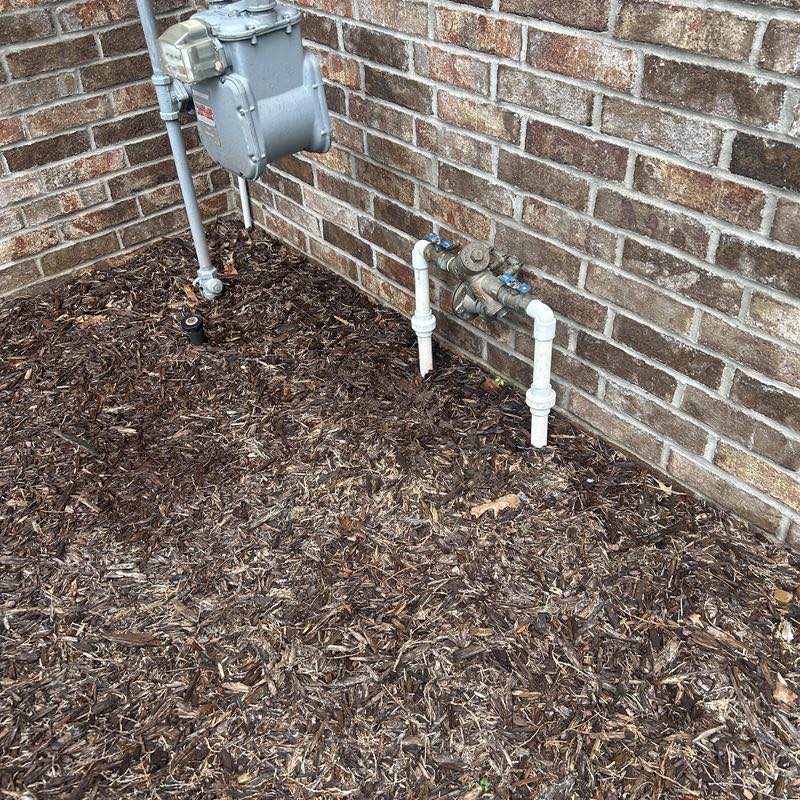
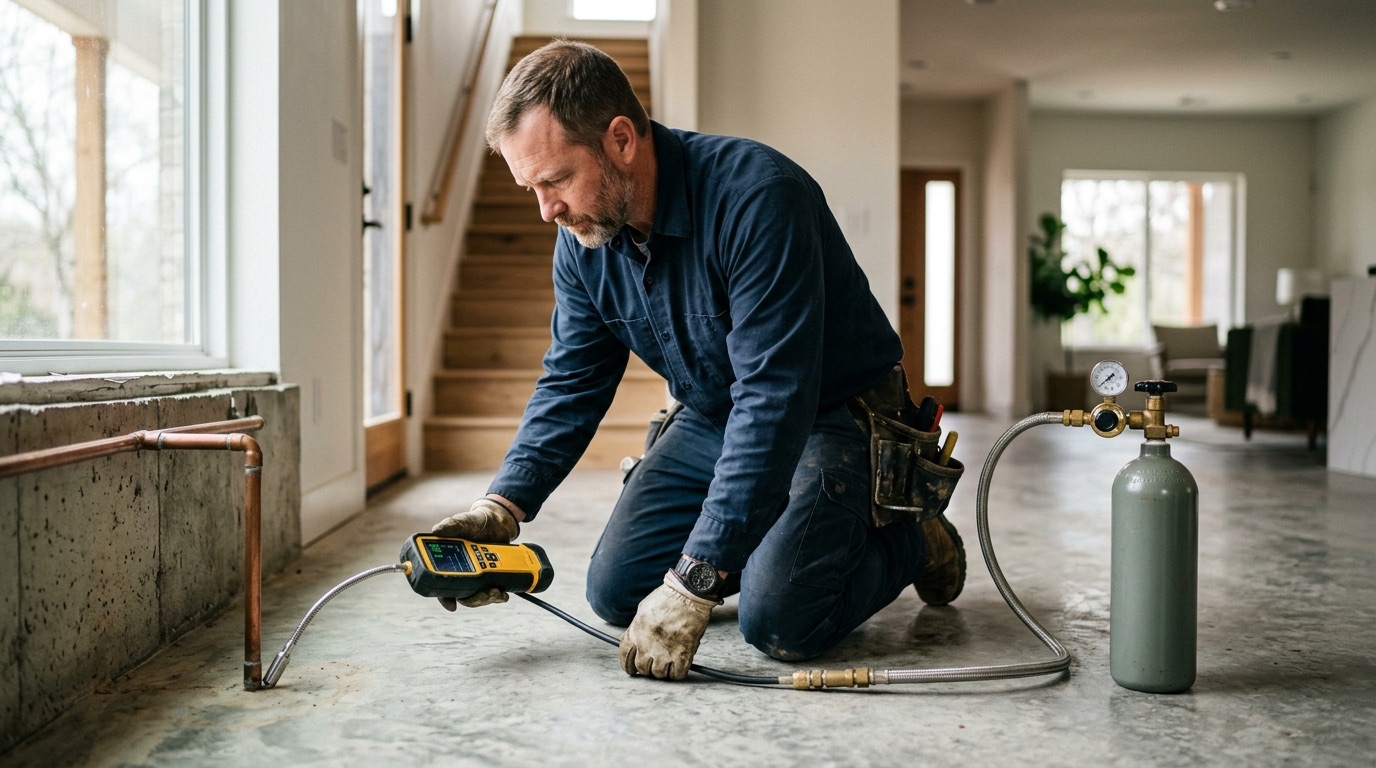
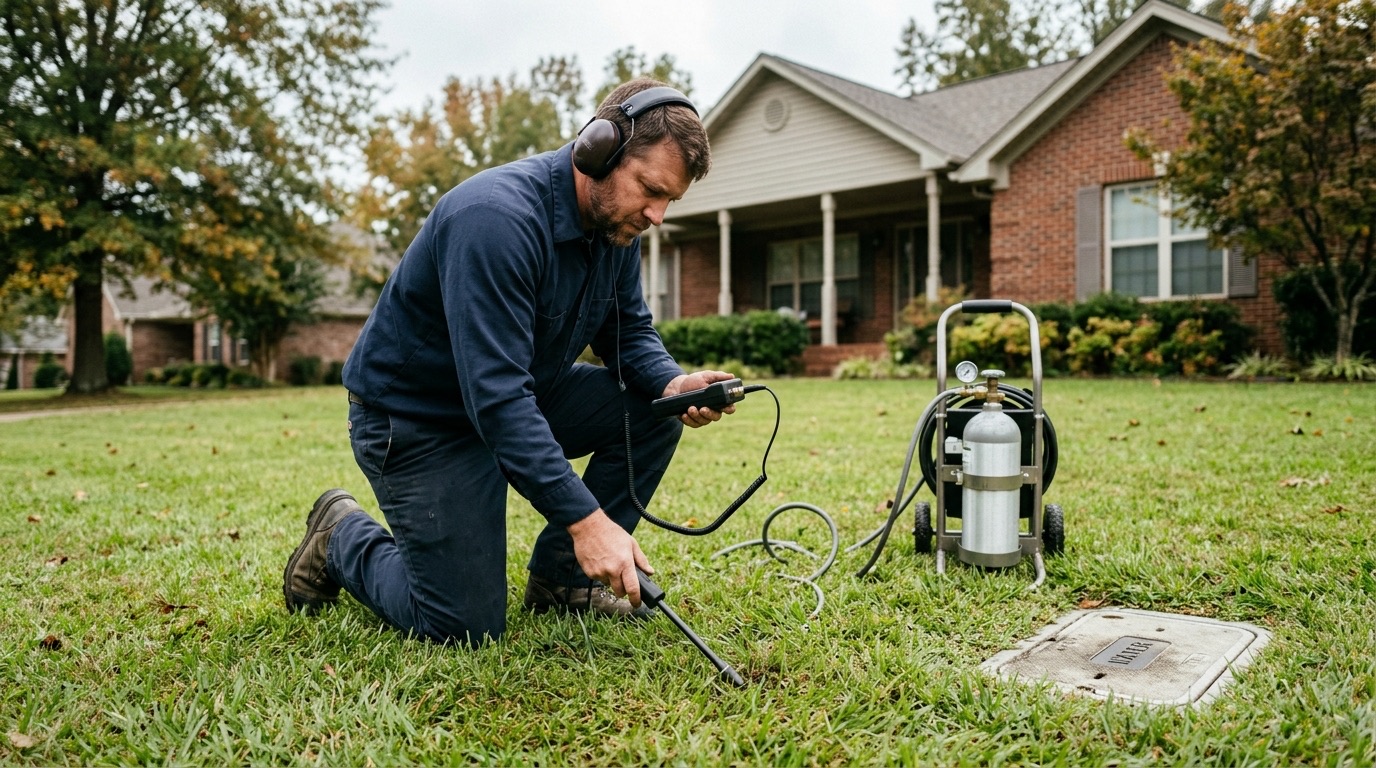
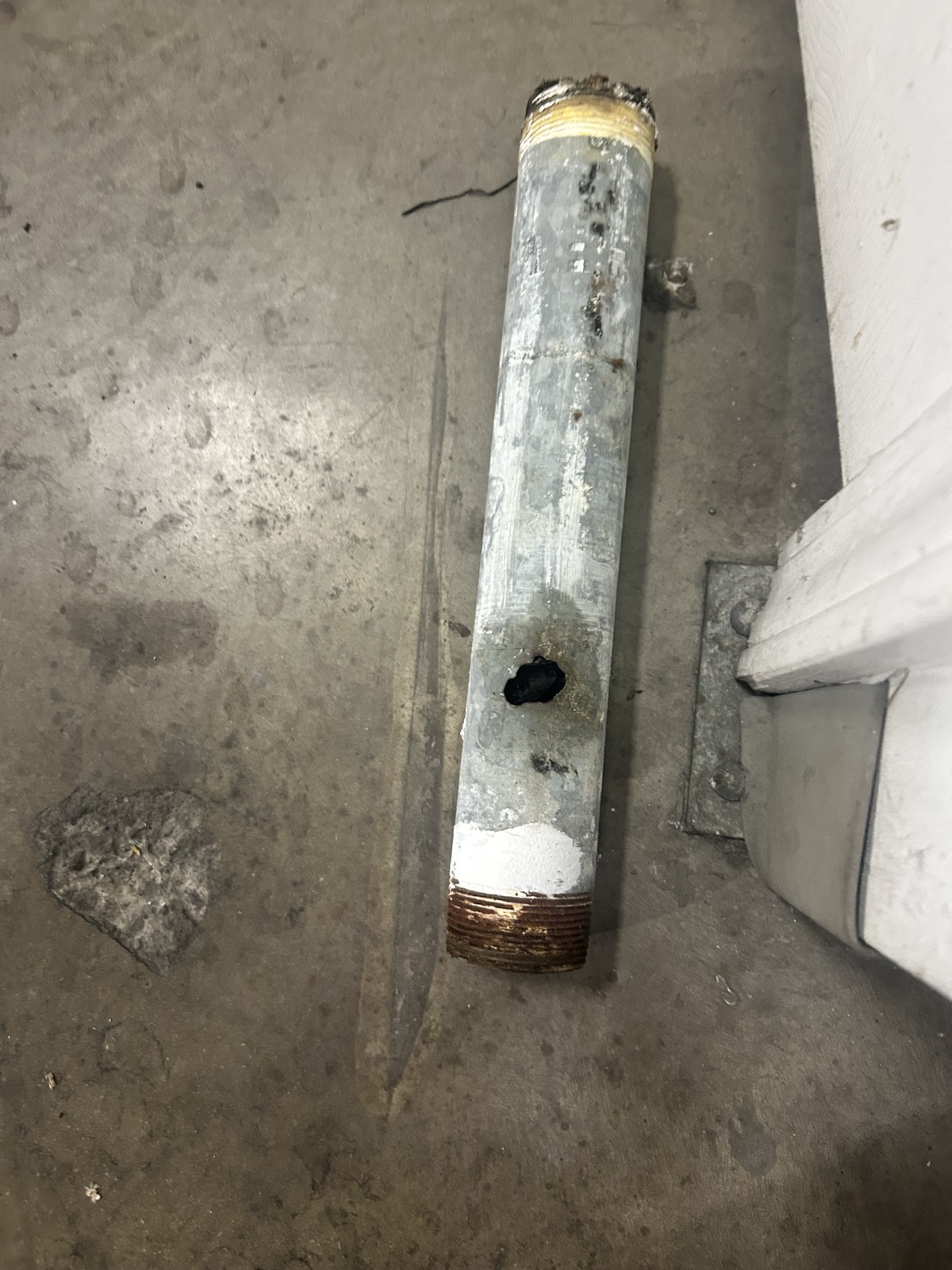
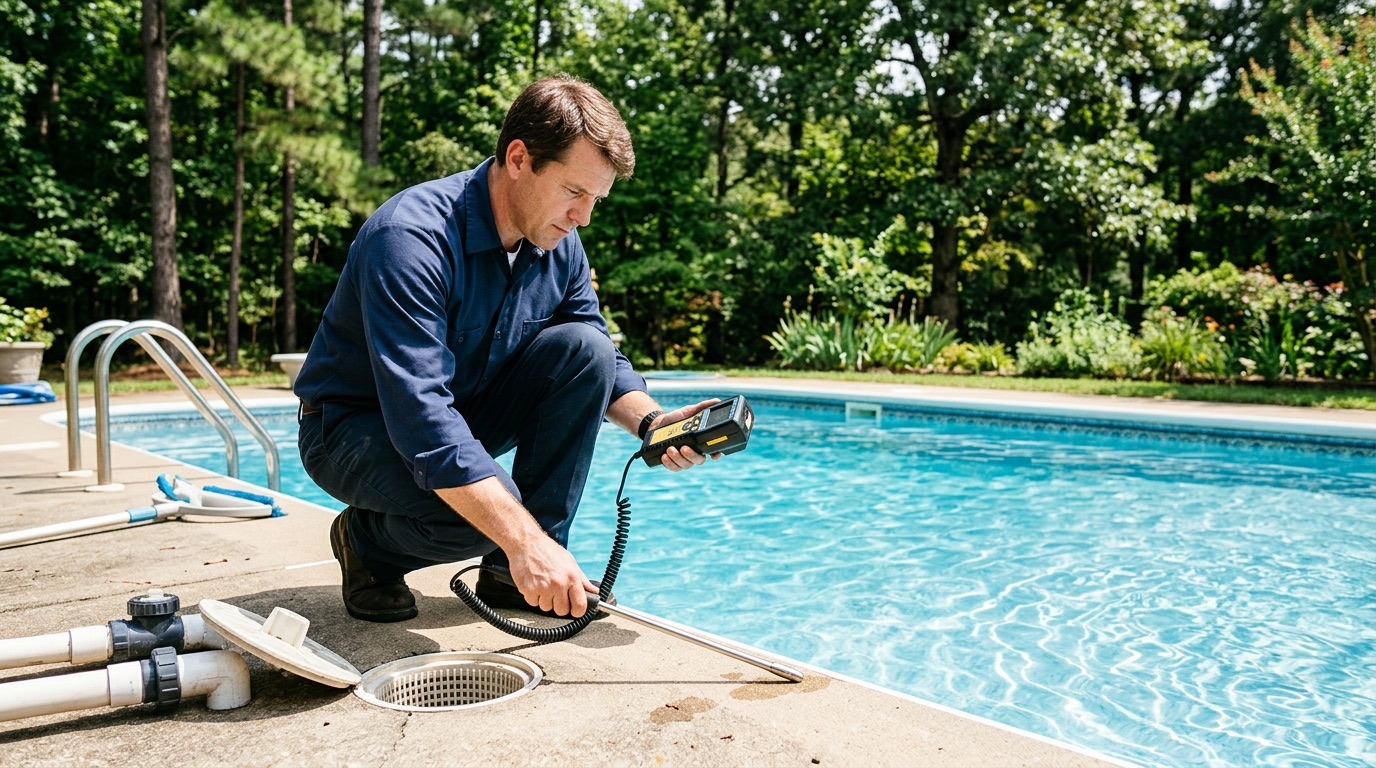
Most pool leaks are not in the shell. They are in the underground lines: skimmer lines, main drain lines, return lines, and the suction and pressure side of the pump. Those pipes are buried under the deck where you cannot see them. We isolate each line, pressurize it with a safe hydrogen/nitrogen tracer gas, and sweep the deck and surrounding ground with our Multi-Pro detector. Where the gas surfaces, that is where the pipe has failed. Then we mark it so the repair is one small opening, not a demolished patio.
What’s included
- Pressure test of skimmer, main drain, and return lines
- Tracer-gas location of underground pool plumbing leaks
- Marks the leak so repair is a single small opening
- Works on concrete, gunite, vinyl-liner, and fiberglass pools
- Spa and hot tub plumbing included
- Repair of the located leak by our licensed team
How to tell if your pool is leaking
Every pool loses some water to evaporation, roughly a quarter inch a day in the Arkansas summer, more on windy days. Losing more than that, or losing water in cool overcast weather, points to a leak. The simple bucket test settles it: set a bucket of pool water on a step, mark the level inside the bucket and on the pool wall, and check both after 24 hours with the pump off. If the pool drops more than the bucket, you have a leak.
Also watch for wet or sunken spots around the deck, air bubbles coming from the return jets, a pump that struggles to hold prime, cracks in the deck, or a chemical balance that will not stay put. If the water loss stops when you shut off the pump, the leak is likely on the pressure side; if it continues, it is more likely the suction side or the shell.