The short answer
- A faucet dripping once per second wastes roughly 3,000 gallons a year — about the water in a small backyard pool.
- At typical Hot Springs area water rates, that adds up to somewhere between $15 and $40 a year on the water bill alone, before you count a water heater working overtime on a hot-side drip.
- Most single drips are a worn washer or a scored cartridge — a $135–$200 repair, not a big job.
- A faucet that drips again a few months after a fix, or drips from multiple spots, usually points to a worn-out valve body or fixture rather than a simple part.
A dripping faucet is easy to ignore because it looks harmless. One drop, a pause, another drop. But that steady rhythm adds up to real gallons and real dollars over the course of a year, and it's worth doing the math before you decide it's not worth fixing.
How Much Water Does a Dripping Faucet Actually Waste?
A faucet leaking at one drip per second wastes about 3,000 gallons a year, according to the EPA's WaterSense program, which is roughly enough water to fill a small above-ground pool. Slower or faster drips scale up or down from there, but even a lazy drip adds up fast over 365 days.
The math is straightforward. A single drop of water is about 1/4,000th of a gallon. At one drip per second, that's roughly 60 drips a minute, 86,400 drips a day, and about 21 gallons a day — call it 7,700 gallons a year at that pace, though EPA's more conservative average lands closer to 3,000 gallons for a typical household drip once you factor in intermittent flow.
| Drip Rate | Estimated Gallons Wasted Per Year |
|---|---|
| 1 drip every 2 seconds | About 1,500 gallons |
| 1 drip per second (steady) | About 3,000 gallons |
| A thin but visible trickle | 10,000+ gallons |
What Does That Actually Cost on the Water Bill?
At typical Arkansas water and sewer rates, 3,000 wasted gallons a year usually lands somewhere between $15 and $40, depending on the local rate structure and whether the drain fee is tied to water use. It's not a huge number on its own, which is exactly why so many drips get ignored for months.
[UNIQUE INSIGHT] The bill itself is almost never the reason to fix a drip fast. The real cost shows up in three other places: a hot-side drip that makes your water heater cycle more than it needs to, mineral staining that etches into a sink or tub finish over months, and the drip that's actually an early symptom of a fixture on its way out.
Hot water drips cost more than cold ones
A drip from the hot side wastes heated water, not just water. That means you're paying twice: once for the water itself, and again for the gas or electricity used to heat water that never gets used. On an older or less efficient water heater, that second cost can quietly outweigh the first.
Is a Dripping Faucet a Simple Fix or a Bigger Problem?
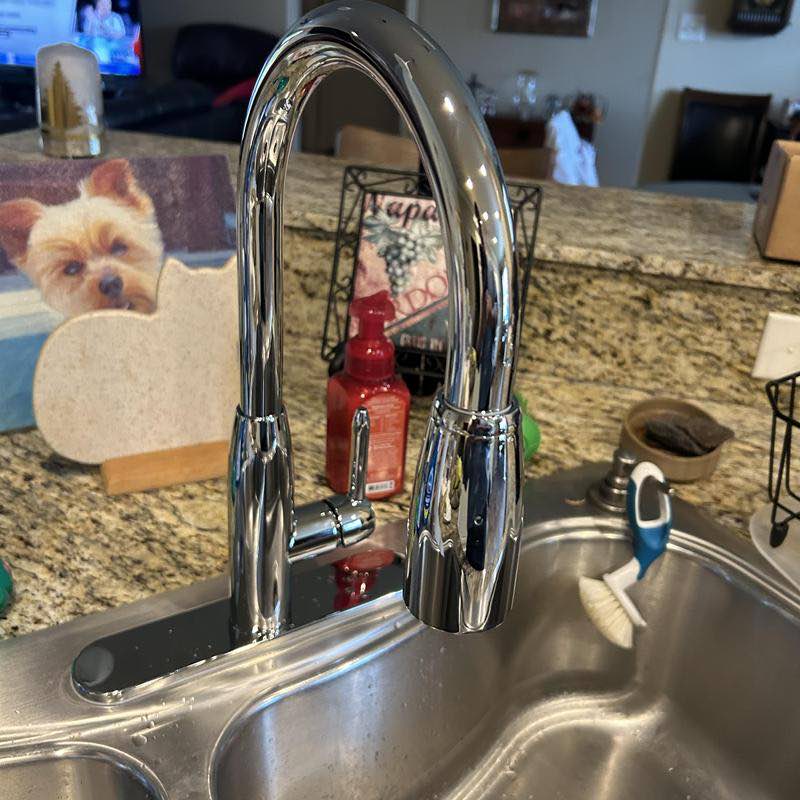
Most single-fixture drips come down to one worn part: a rubber washer in an older compression faucet, or a scored ceramic cartridge in a newer one, according to the EPA's Fix a Leak Week guidance. That kind of repair is usually a same-visit job and one of the cheaper calls we run.
[PERSONAL EXPERIENCE] In our experience working on faucets across Hot Springs, Hot Springs Village and Malvern, the washer-or-cartridge fix accounts for the large majority of single-drip calls. The faucet still looks and feels fine everywhere else, and the drip stops the moment the worn part is swapped.
Signs it's a quick, inexpensive fix
- One faucet, one drip point, no drip anywhere else in the house
- The faucet is under roughly 10 years old
- Water pressure and flow feel normal when the faucet is on
- The drip started recently, not months ago
Signs it's actually a bigger fixture problem
- The same faucet has been repaired more than once in the past year or two
- The faucet is loose at the base, or wobbles when you turn the handle
- You see mineral buildup, green staining, or corrosion around the fixture
- Water pressure has dropped along with the drip
- Multiple faucets in the house are dripping around the same time
That second list usually means the valve body itself, or the faucet as a whole, has worn out rather than just one part inside it. At that point, replacing the fixture is often the more sensible move than repairing it a third time.
How Much Does Faucet Repair Cost in Hot Springs?
A minor faucet repair in the Hot Springs market typically runs $135–$200, while replacing an aging or failing faucet outright runs $150–$450 depending on the fixture, a range consistent with our Hot Springs plumbing pricing guide. Bowen Plumbing quotes every faucet repair and installation job as one flat price before we start, so you know the number going in.
When replacement beats another repair
If a faucet is old enough that parts are hard to source, or it's already been repaired once or twice for the same drip, another repair often just delays the inevitable. A new faucet install is a predictable, flat-rate job, and it usually resolves the underlying wear that kept bringing the drip back.
Should You Wait to Fix a Dripping Faucet?
Waiting rarely saves money. A drip that's ignored for a year can waste thousands of gallons, stain the fixture, and — in the worst cases — let a worn valve seat erode further, turning a simple washer swap into a full faucet replacement. Fixing it early keeps the job small.
There's no scare-tactic math needed here. A dripping faucet is not an emergency, and it won't flood your house overnight. It's just a small, steady drain on water, energy, and eventually the fixture itself, and it's a cheap problem to solve while it's still small.
Ready to Stop the Drip?
If a faucet in your Hot Springs, Hot Springs Village, Malvern, Bismarck, Jessieville, Pearcy or Royal home has been dripping for a while, get in touch or call (501) 318-3747. We'll take a look, tell you honestly whether it's a quick fix or time for a new fixture, and give you a flat price before any work begins.