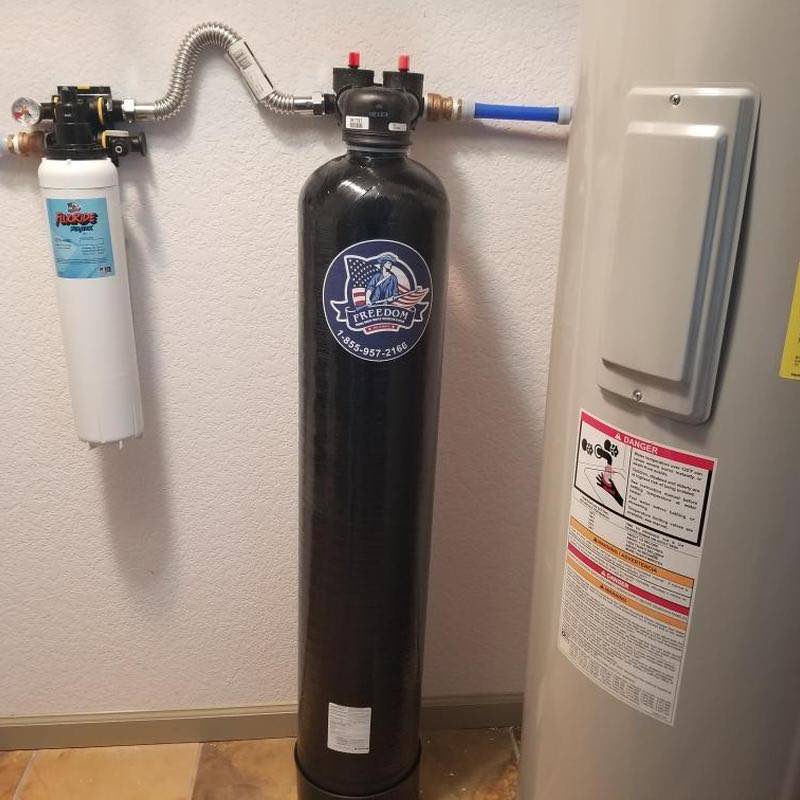
The short answer
- Whole-house sediment/carbon filters remove grit, chlorine taste and odor from all the water in the house — they don't touch hardness.
- Water softeners solve hardness specifically, by removing calcium and magnesium that scale pipes, water heaters and fixtures.
- Under-sink reverse osmosis (RO) treats only your drinking water, pulling out dissolved solids a whole-house filter or softener leaves behind.
- Most Hot Springs homes only need one or two of these, not all three — a water test tells you which.
Walk into a big-box store looking for a water filter and you'll walk out more confused than when you went in. Whole-house systems, softeners, under-sink RO units, pitcher filters — they all get lumped under "water filtration," and they solve completely different problems.
Bowen Plumbing is a family-owned company that's served Hot Springs and the surrounding area for 41 years. We'd rather tell you which system actually matches your water than sell you the biggest one on the shelf. This guide breaks down what each option really does, so you're not paying for filtration that solves a problem you don't have.
What's the Difference Between Filtration and Softening?
Filtration removes particles, chlorine taste, and odor from water; softening removes the calcium and magnesium minerals that cause hardness. They're not interchangeable — a carbon filter won't stop scale buildup, and a softener won't clear up chlorine smell or sediment. Confusing the two is the single most common reason homeowners end up with the wrong system.
We covered water hardness specifically in our post on hard water in Garland County — worth a read if scale on your fixtures and a struggling water heater are your main complaint. This post is broader: it covers the full lineup of filtration options and what each one is actually built to solve.
Whole-House Sediment and Carbon Filters: What They Solve
A whole-house sediment and carbon filter removes grit, rust particles, and chlorine taste or smell from every tap in the home, treating water as it enters the house. It's the right call for homes with visibly cloudy water, a chlorine odor from municipal supply, or fine sediment that's showing up in aerators and appliances.
These systems sit on the main water line, usually near where it enters the house or garage. A sediment stage catches physical particles — sand, rust flakes, silt — while a carbon stage adsorbs chlorine and the taste and smell that come with it. Cartridges get swapped on a schedule, typically every three to six months depending on water quality and household use.
What a sediment/carbon filter will not do is soften water. If your real complaint is spots on dishes, chalky buildup on faucets, or soap that won't lather, a whole-house filter alone won't fix it — that's a hardness problem, and it needs a softener.
Do You Actually Need a Water Softener?
A water softener is the right fix specifically for hard water — mineral scale from calcium and magnesium that coats pipes, water heater elements, and fixtures. Most Garland County homes run moderately hard to hard, generally above 7 grains per gallon, based on the region's limestone-influenced groundwater and surface sources.
Signs a softener is the answer, rather than a filter, are specific: white scale around faucets and showerheads, cloudy spots on glassware straight out of the dishwasher, dingy laundry, and a water heater that's taking longer to heat or making popping noises. None of those are chlorine or sediment issues — they're mineral issues, and only a softener treats them at the source.
More than once we've been called out for a "filtration problem" that turned out to be plain hardness — a homeowner had already installed a whole-house carbon filter and was still getting scale on every fixture, because the filter was never built to remove calcium and magnesium in the first place.
What Does Under-Sink Reverse Osmosis (RO) Actually Filter Out?
Under-sink reverse osmosis pushes water through a fine membrane that strips out dissolved solids, lead, and other contaminants a whole-house filter or softener won't touch, delivering noticeably cleaner drinking and cooking water at one tap. It's a point-of-use system, not a whole-house one — it treats the water you drink, not the water in your shower or washing machine.
RO systems mount under the kitchen sink and typically feed a dedicated faucet, plus the fridge line if you want it. They're worth considering if your household drinks a lot of tap water, you're on a private well with unknown water quality, or you want the cleanest possible water for cooking and infant formula without switching to bottled.
RO is not a fix for hard water on its own, and it's not a whole-house solution — installing one under the kitchen sink does nothing for the water heater, the shower, or the washing machine down the hall. Households that want both softer household water and cleaner drinking water usually run a softener for the whole house and RO at the kitchen tap.
Filtration vs. Softening vs. RO: Which One Solves Your Problem?
The table below matches each common complaint to the system built to fix it — the fastest way to avoid buying the wrong equipment for your actual water issue.
| Your Problem | Right System | What It Doesn't Fix |
|---|---|---|
| Chlorine taste or smell, cloudy water, sediment/grit | Whole-house sediment/carbon filter | Hardness (scale), dissolved solids in drinking water |
| Scale on fixtures, spotted dishes, struggling water heater | Whole-house water softener | Chlorine taste, sediment, drinking water purity |
| Wanting the cleanest possible drinking/cooking water | Under-sink reverse osmosis (RO) | Household-wide hardness, shower or laundry water quality |
| Both hard water and drinking water concerns | Whole-house softener + under-sink RO | N/A — this combination covers both |
How Do You Know Which System You Actually Need?
A water test is the only reliable starting point — it tells you your actual hardness in grains per gallon and flags whether sediment, chlorine, or other contaminants are part of the picture. Guessing based on a neighbor's system, or buying whatever's on sale, is how homeowners end up with equipment that doesn't match their water.
Homeowners often assume filtration is the safe, do-everything option and buy the biggest whole-house unit they can find, on the logic that more filtration can't hurt. In practice it usually just means paying for stages you don't need while the actual problem — hardness, in most Hot Springs cases — goes untreated.
- Start with a water test, not a guess or a sales pitch.
- Match the system to the specific symptom — scale means a softener, taste/odor means a filter, drinking water purity means RO.
- Combine systems only when the test shows you actually need both.
- Get one flat, up-front price for the install, whatever the system.
Is Water Filtration Worth It for Hot Springs Homes?
For most Hot Springs homeowners, yes — but the value comes from matching the right system to the right problem, not from stacking every option available. A softener sized to your actual hardness protects pipes, water heaters, and appliances for years; RO at the kitchen sink is a smaller, targeted investment for drinking water quality.
Skipping the water test and buying based on guesswork is the most common way this goes wrong — either underpaying for a system that won't solve the real issue, or overpaying for filtration stages a home doesn't need. A short conversation up front saves both money and a second install down the road.
Getting the Right System the First Time
Filtration, softening, and RO solve three different problems, and the fix that works for your neighbor's well water isn't automatically the fix for your municipal supply. Bowen Plumbing has served Hot Springs, Hot Springs Village, Malvern, Bismarck, Jessieville, Pearcy, and Royal for 41 years.
If you're dealing with scale, chlorine smell, sediment, or just want better drinking water, get in touch or call (501) 318-3747. We'll walk you through what your water actually needs and give you one flat price before any work begins.