The short answer
- Water across Garland County runs moderately to very hard, mainly from dissolved calcium and magnesium in the local groundwater and lake sources.
- Hard water shows up as spots on dishes and glassware, chalky white scale around faucets, and soap that won't lather well.
- Left alone, mineral buildup narrows pipe diameter, coats water heater elements, and shortens the life of fixtures and appliances.
- A whole-house water softener or filtration system is the most reliable fix, but it's worth confirming the problem with a water test first.
If you've ever pulled a glass out of the dishwasher in Hot Springs and found it covered in cloudy white spots, that's not a dishwasher problem — it's a water problem. Garland County's water supply carries a fair amount of dissolved calcium and magnesium, and those minerals leave a mark on everything they touch.
None of this happens overnight. Hard water works slowly, coating pipes, water heater elements, and fixtures a little more with every gallon that runs through them. Understanding what's actually going on — and what your real options are — makes it a lot easier to catch before it turns into a bigger repair.
Is the Water in Hot Springs, AR Actually Hard?
Most homes in Garland County deal with moderately hard to hard water, largely from calcium and magnesium picked up as it moves through the region's limestone-influenced groundwater and surface sources. That mineral content is what leaves the white residue on faucets, shower doors, and dishes throughout the area.
Water hardness is measured in grains per gallon (GPG). Anything above 7 GPG is generally considered hard, and above 10 GPG is very hard. Hardness can vary somewhat by neighborhood and by whether a home is on a private well or municipal supply, so the only way to know your exact number is a water test — not a guess based on a neighbor's experience.
We see the effects of hard water in homes across Hot Springs, Hot Springs Village, Malvern, Bismarck, Jessieville, Pearcy, and Royal regularly enough that it's one of the more common calls we get once a water heater or set of fixtures starts acting up.
What Are the Signs of Hard Water in Your Home?
Hard water rarely announces itself with a single dramatic sign — it builds gradually, showing up first in small annoyances before it becomes a plumbing issue. Homeowners usually notice several of the following at once rather than just one.
- Spots and film on dishes and glassware, even fresh out of the dishwasher
- Chalky white or gray buildup (scale) around faucet aerators, showerheads, and drains
- Soap and shampoo that won't lather well, leaving skin and hair feeling filmy
- Dingy, stiff laundry, even with a full detergent dose
- Water pressure that drops gradually over months or years, not suddenly
- A water heater that takes longer to heat, or that makes popping and rumbling noises
- Faucets and showerheads that clog or slow to a trickle over time
Any one of these on its own could have another cause. Several showing up together, especially the spotting and scale, is a strong signal that water hardness is the underlying issue.
How Does Hard Water Damage Pipes and Fixtures?
Hard water damages plumbing by depositing mineral scale on every interior surface it touches, gradually narrowing pipe diameter and coating fixtures. Over years, that buildup restricts flow, stresses water heater components, and shortens the working life of faucets, valves, and appliances that use water.
Inside your pipes
As mineral-heavy water moves through supply lines, calcium and magnesium slowly precipitate out and cling to the interior pipe walls. Over years, that layer thickens, effectively shrinking the pipe's usable diameter — which is a common, gradual cause of reduced water pressure that homeowners often chalk up to "old plumbing" without knowing why.
Inside your water heater
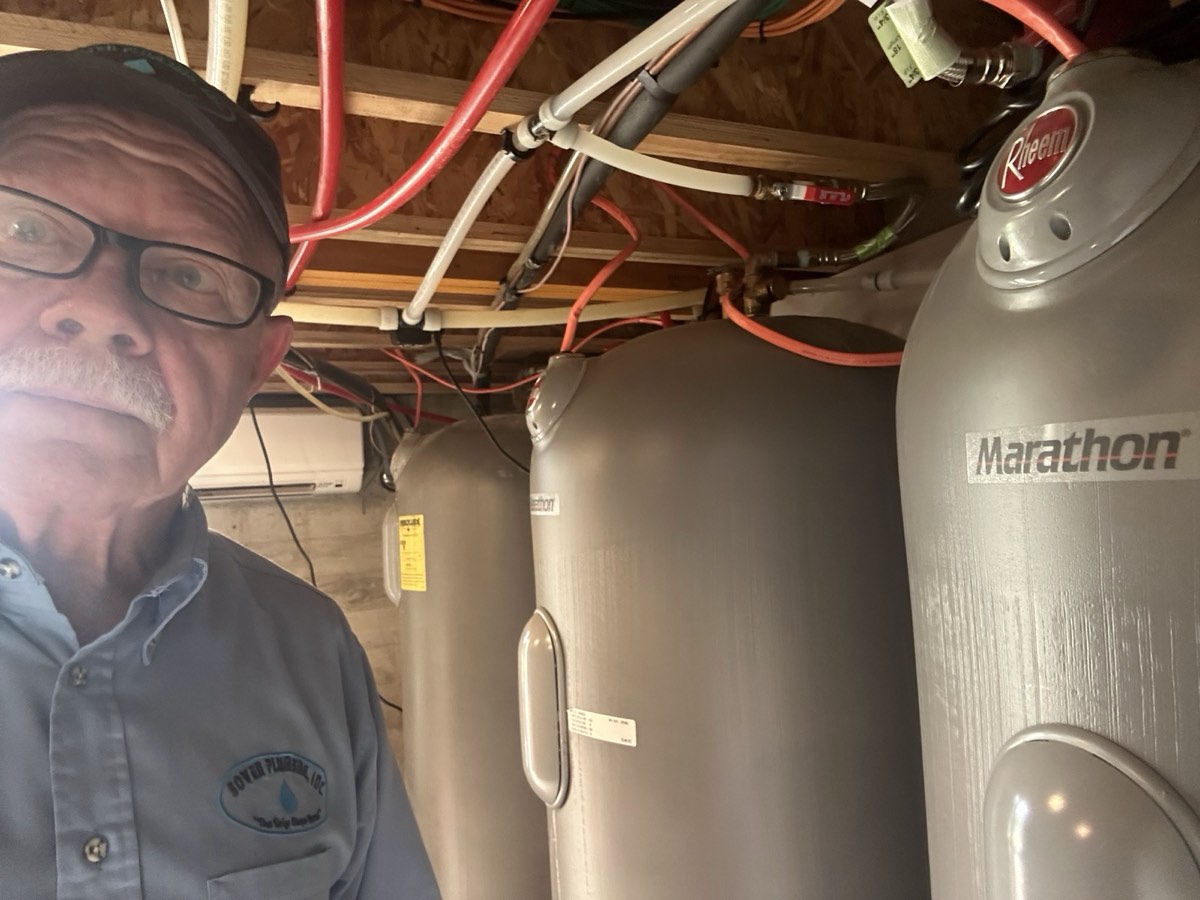
Water heaters take the hardest hit. Scale settles at the bottom of a tank unit and coats the heating element, forcing the unit to work harder and longer to heat the same amount of water. That extra strain shows up as higher energy use, popping or rumbling sounds, and a shorter lifespan overall. If you're seeing these signs, our water heater repair page covers what to check before replacement becomes the only option.
On fixtures and appliances
Faucet aerators, showerheads, and appliance valves are small enough that even modest scale buildup restricts them quickly. Dishwashers, washing machines, and coffee makers all show wear faster in hard water areas — you'll typically get more mileage out of these appliances with treated water than without it.
In older plumbing systems
Homes with aging galvanized pipe are especially prone to this kind of internal buildup, since corrosion inside the pipe gives mineral scale more surface area to grab onto. If your plumbing is decades old and pressure has been dropping for a while, it may be worth a broader look — our whole-house repiping page explains when replacing old lines makes more sense than continuing to patch around them.
What Can You Do About Hard Water?
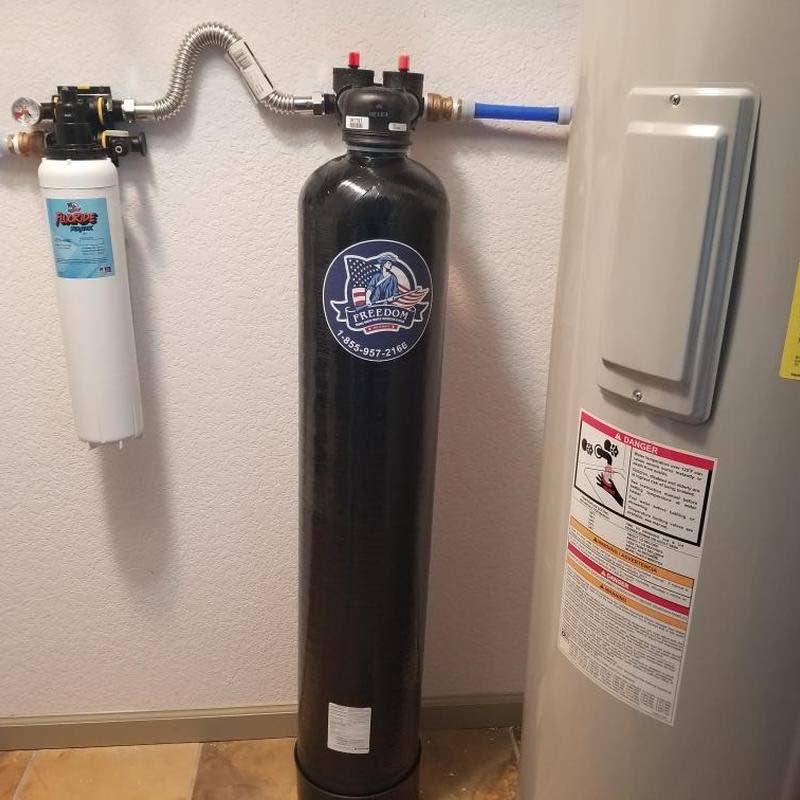
A whole-house water softener is the most common and most effective fix for hard water, removing calcium and magnesium before they reach your pipes, water heater, and fixtures. Point-of-use filtration can help in specific spots, but it doesn't protect the plumbing system the way a whole-house unit does.
Whole-house water softeners
A softener installed where water enters the home treats everything downstream — every faucet, every appliance, and the water heater itself. This is the option that actually protects your plumbing over the long run, rather than just improving how the water feels or tastes at one tap.
Point-of-use filtration
Filters at the kitchen sink or refrigerator line can improve taste and clarity for drinking water, but they don't address hardness moving through the rest of the house. They're a reasonable add-on, not a substitute for treating the whole system.
Simple habits that help in the meantime
- Wipe down faucets and shower glass regularly to slow visible scale buildup.
- Use a descaling solution periodically on showerheads and aerators.
- Flush your water heater annually to clear sediment before it hardens into scale.
- Watch for gradually dropping pressure — it's easier to address early than after years of buildup.
Is a Water Softener Worth It in Hot Springs?
For most Garland County homeowners dealing with visible spotting, scale, or a water heater that's struggling, a softener pays for itself through fewer repairs and longer-lasting fixtures and appliances. It's a bigger decision for a home with a private well or unusually hard water than for a borderline case.
The honest starting point is a water test, not a sales pitch. Once you know your actual hardness number, it's a straightforward call whether a softener makes sense now or whether it's something to keep an eye on.
Protecting Your Plumbing Long Term
Hard water isn't an emergency, but it is a slow, steady cost — in pipe life, water heater life, and appliance life — that adds up over years in a Garland County home. Catching the early signs and addressing them with the right fix, rather than ignoring them, is what keeps that cost from becoming a bigger repair bill down the road.
If you're seeing scale, spotting, or a water heater that's working harder than it used to, get in touch or call (501) 318-3747 and we'll take a look. Bowen Plumbing has served Hot Springs and the surrounding area for 41 years, and every recommendation comes with a flat, up-front price before any work starts.