The short answer
- If you suspect a frozen pipe, shut off the main water valve first if there's any sign of bulging, cracking, or leaking — that single step limits most of the damage.
- Apply gentle, steady heat with a hair dryer, warm towels, or a space heater kept at a safe distance — never an open flame or torch.
- Leave the nearest faucet open on that line so melting ice has somewhere to drain instead of building pressure.
- Bowen Plumbing works Monday through Saturday, 8am to 5pm, and does not run after-hours calls — this guide covers what to do until you can reach us during business hours.
A faucet that won't run, or a section of pipe that's frosted over, is usually the first sign something's frozen. What you do in the next few minutes matters more than almost anything a plumber does afterward, and most of it doesn't require any special tools.
This isn't a scare piece. A frozen pipe in Hot Springs is a fairly common cold-snap problem, not an emergency in most cases, and it's manageable if you know the order of operations. We've put together our companion winterizing checklist for preventing this in the first place — this post picks up once a pipe is already frozen.
How Do You Know a Pipe Is Frozen?
A frozen pipe usually shows up as no water, or a weak trickle, from a single faucet while the rest of the house runs normally, according to guidance from the U.S. Department of Energy on residential pipe protection. Frost on an exposed section of visible pipe is another common giveaway.
The faucets most likely to be affected are the ones fed by pipes running through unheated space — a crawl space, garage, exterior wall, or under a mobile home. If a kitchen or bathroom on an interior wall goes dry while an exterior-wall faucet still works, freezing is unlikely to be the cause; something else is going on.
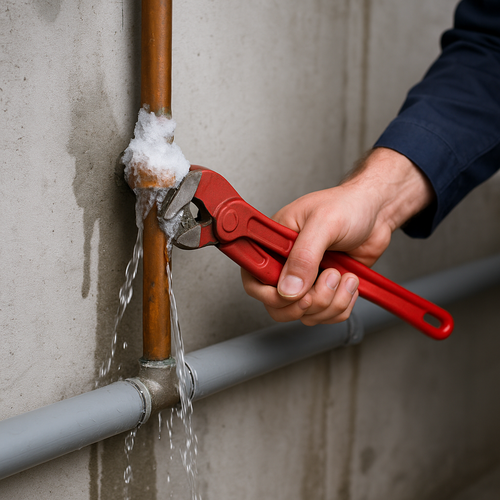
Check for visible signs before assuming the worst. Look under sinks, in the crawl space if you can safely access it, and along any exposed run near an exterior wall for frost, bulging, or a section that feels unusually cold to the touch.
Should You Shut Off the Water First?
Yes — shut off the main water valve immediately if the frozen pipe shows any bulging, cracking, or is already leaking, since a frozen line under pressure can split without warning, per guidance from the American Red Cross on winter storm home safety.
If nothing looks damaged yet and you just have no water at one fixture, you don't necessarily need to shut off the whole house — but knowing where the main valve is, and confirming it actually turns, is worth doing right now rather than during a leak. This is the single step that limits water damage most.
How Do You Safely Thaw a Frozen Pipe?
Gentle, steady heat is the safe way to thaw a frozen pipe — a hair dryer, warm (not boiling) towels, or a space heater kept a safe distance from anything flammable, according to the U.S. Department of Energy. Slow and steady beats fast every time here.
Start closest to the faucet
Work from the open faucet back toward the blockage, not the other way around. Thawing from the middle of a frozen section first can trap melting water and steam between two ice plugs, which raises pressure right where you don't want it.
Leave the faucet open
Open the faucet on the affected line before you start applying heat and leave it open the whole time. That gives melting ice somewhere to drain to as it thaws, instead of building pressure behind it — and it's how you'll know when the blockage clears.
Be patient
A fully frozen section can take anywhere from thirty minutes to a couple of hours to clear with gentle heat, depending on how long it's been frozen and how much pipe is affected. Rushing the process with too much heat is where most avoidable damage happens.
What Should You Never Do to a Frozen Pipe?
Never use an open flame, a blowtorch, or any high-heat tool directly on a frozen pipe — sudden, uneven heat can cause the pipe to crack or, on certain materials, create a fire hazard, per the American Red Cross. Gentle and gradual is always the safer route.
A few other mistakes we see fairly often, and why they backfire:
- Don't use a propane torch, blowtorch, or any open flame — even on metal pipe, the heat is uneven and can scorch nearby framing or insulation.
- Don't leave a space heater or heat lamp unattended near a pipe — walk away and it can overheat the area or become a fire risk.
- Don't hammer, pry, or force a frozen section to try to break the ice loose — this is one of the most common ways a pipe splits.
- Don't ignore a pipe that's already dripping or wet around a joint — that's usually a sign it's already cracked, not just frozen.
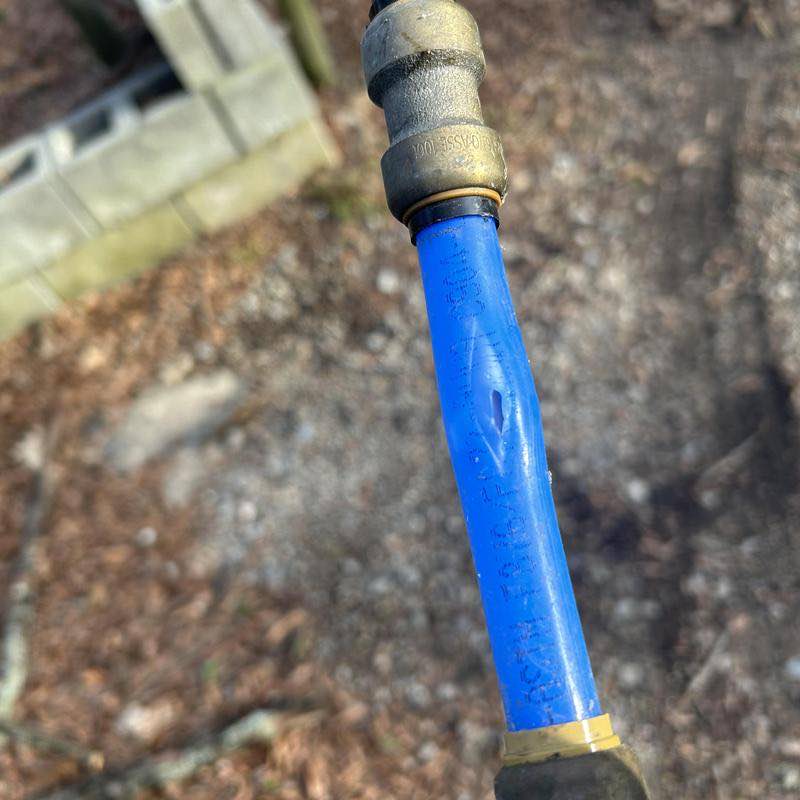
- Don't assume PVC or PEX can't split — plastic pipe freezes and fails just like copper does, it just may not show frost as visibly.
What If You Can't Find or Reach the Frozen Section?
Call for frozen pipe repair rather than guessing if the frozen section is inside a wall, under a slab, or otherwise out of reach — opening up a wall on your own risks turning a simple thaw into a repair job, without necessarily fixing anything.
The same goes if you've already tried gentle heat for an hour or more with no change, or if you can hear water running somewhere you can't see it. At that point, further DIY effort mostly just delays getting it sorted properly.
Frozen Pipe Do's and Don'ts at a Glance
A quick-reference version of everything above, for the moment you're standing in front of a frozen faucet and need the short list.
- DO shut off the main water valve if you see bulging, cracking, or any leaking.
- DO apply gentle heat — hair dryer, warm towels, or a space heater at a safe distance.
- DO leave the faucet on the affected line open while you work.
- DO start thawing closest to the faucet and work back toward the blockage.
- DON'T use a torch, open flame, or other high-heat tool directly on the pipe.
- DON'T leave a heat source unattended near the pipe.
- DON'T hammer, pry, or force a frozen section.
- DON'T keep working a section you can't reach or see — call instead.
Where Bowen Plumbing Handles Frozen Pipe Repair
We handle frozen and burst pipe repair for homeowners across Hot Springs, Hot Springs Village, Malvern, Bismarck, Jessieville, Pearcy, and Royal, quoting every job as one flat price before we start. Forty-one years in this market means we've seen where the cold hits hardest.
If a pipe's already frozen, work through the steps above first. If you can't clear it, or it's already split, get in touch or call (501) 318-3747 when we're open. For the prevention side of this, our winterizing checklist covers what to do before the next cold snap hits.