The short answer
- Grease, fibrous vegetables, bones, coffee grounds, and starchy peels cause most disposal jams and burnouts — not general food waste.
- Running cold water before, during, and after use keeps waste moving and protects the motor.
- A jammed disposal can often be freed at home with an Allen wrench and the reset button — never your hand.
- If the unit hums but won't spin after a reset, smells burnt, or leaks, stop and call a plumber instead of forcing it.
A garbage disposal is one of those appliances nobody thinks about until it stops working — usually mid-dinner cleanup, with a sink full of water that won't drain. Most of what sends Hot Springs homeowners searching for garbage disposal repair traces back to a handful of habits that are easy to fix once you know them.
We've been repairing and installing disposals across Hot Springs, Hot Springs Village, Malvern, Bismarck, Jessieville, Pearcy, and Royal for 41 years, and the same problems show up again and again. This guide covers what actually damages a disposal, what's safe to run through it, a jam-clearing method you can try before calling anyone, and the point where it's smarter to stop and let a pro handle it.
What Actually Damages a Garbage Disposal?
Grease, fibrous vegetables, bones, and heavy coffee grounds cause the majority of disposal jams and motor failures we see. According to the InSinkErator care guide, grease and fibrous waste are the two most common causes of clogged drain lines connected to a disposal.
None of these foods are dangerous in small amounts. The problem is that they don't grind cleanly — they wrap around the impellers, coat the chamber, or pass through only partly broken down, then set up like cement further down the drain line.
Grease and cooking oil
Grease goes down as a liquid but cools and hardens inside the pipe, not the disposal itself. Over time it narrows the drain line until water backs up. Pour cooled grease into a can and toss it instead.
Fibrous vegetables
Celery, corn husks, onion skins, and asparagus contain long fibers that wind around the impellers instead of chopping up. That's what causes the disposal to hum without spinning — the blades are physically tangled, not broken.
Bones, fruit pits, and shells
A disposal isn't a garbage grinder for hard objects. Bones, peach pits, and eggshells in quantity dull the impellers and strain the motor, shortening the unit's life even when it seems to handle them fine at first.
Coffee grounds and starchy peels
A small amount of coffee grounds is fine, but in volume they settle into a dense sludge in the trap. Potato peels and other starchy skins do something similar, forming a paste that clogs the drain rather than the disposal.
How Do You Use a Garbage Disposal Safely?
Running cold water before, during, and after grinding is the single habit that does the most to protect a disposal, according to the U.S. Department of Energy's kitchen appliance guidance. Cold water keeps grease solid so it grinds and flushes through instead of coating the chamber.
Beyond water temperature, a few simple habits keep most disposals running for years without a service call.
Do this
- Run cold water for a few seconds before, during, and after grinding
- Feed food scraps in small amounts rather than dumping a full plate at once
- Grind citrus peels occasionally — they help clean the chamber and cut odor
- Run the disposal regularly, even with light use, so parts don't seize from sitting idle
- Clean the splash guard and rim with a brush every so often to clear buildup
Don't do this
- Don't pour grease or cooking oil down the drain, even in small amounts
- Don't run fibrous vegetables like celery, corn husks, or artichoke leaves through it
- Don't put bones, fruit pits, or shells in the disposal
- Don't dump large volumes of coffee grounds or starchy peels in at once
- Don't use chemical drain cleaner in a disposal — it can corrode the components
- Don't ever reach into the disposal with your hand, even when it's off
How Do You Clear a Jammed Garbage Disposal Yourself?
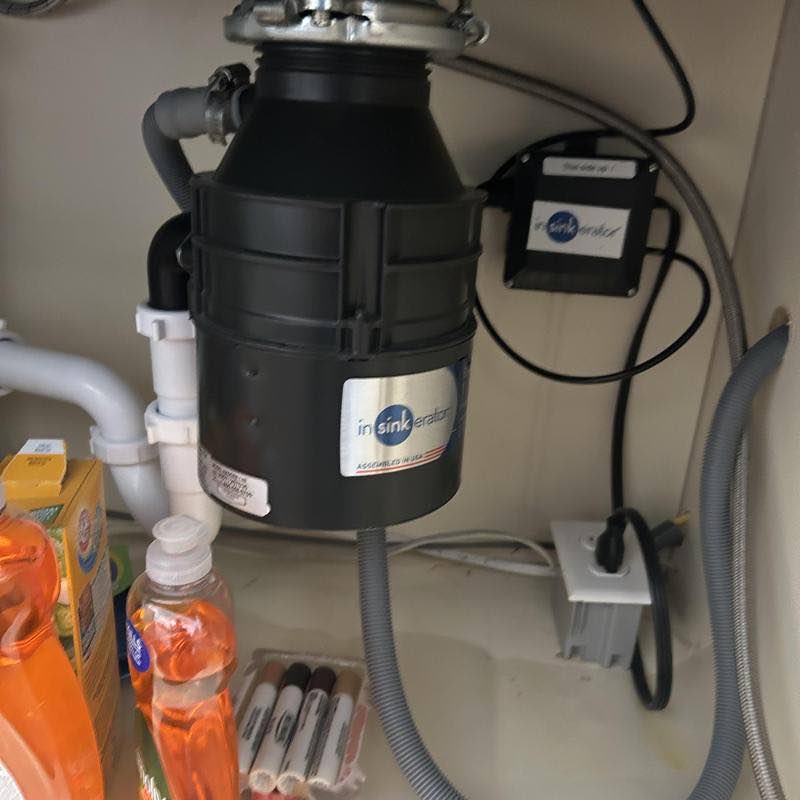
Most simple jams can be freed at home in under five minutes using the reset button and the Allen wrench that came with the unit — no need to call anyone for a basic hang-up. Skip this if you smell burning or the motor won't hum at all.
- Turn off the disposal and unplug it under the sink, or switch off the breaker if it's hardwired
- Look underneath the unit for a small hex-shaped hole and insert the Allen wrench that came with the disposal
- Turn the wrench firmly back and forth to work the impeller plate loose in both directions
- Once it turns freely, remove the wrench, restore power, and press the small red reset button on the bottom of the unit
- Turn on cold water and run the disposal briefly to confirm it spins freely and drains normally
If you don't have the hex wrench, a sturdy wooden spoon handle braced against an impeller blade from the top — with the power off — can sometimes free a light jam. Never use your hand, even with the unit unplugged.
When Should You Stop and Call a Plumber?
A disposal that hums but won't spin even after a reset, smells burnt, leaks under the sink, or trips the breaker repeatedly needs a plumber rather than more force. Forcing a jammed motor risks burning it out completely, turning a simple fix into a full replacement.
A few specific signs mean it's time to stop troubleshooting:
- The unit hums but the impellers won't turn, even after using the Allen wrench and resetting it
- You smell something burning, which usually points to a failing motor
- Water is leaking from underneath the unit or around the sink flange
- The breaker keeps tripping every time you try to run it
- The disposal is more than 10–12 years old and starting to fail repeatedly
We troubleshoot units that hum, leak, or won't turn on, clear stubborn jams safely, and replace disposals that have reached the end of the road, with correct wiring, mounting, and leak testing on every install. If you're past the point of a wrench and a reset button, our garbage disposal repair and installation page covers what that visit looks like and what a repair or replacement runs.