The short answer
- Gas line work in Arkansas requires a licensed plumber and a permit for any new line, extension, or repair connecting to a home's gas system.
- Homeowners can safely learn where the main gas shutoff is and recognize the smell of gas, but should never touch a fitting, connection, or line themselves.
- If you smell gas, leave the house, don't flip switches, and call your gas utility's emergency line from outside before calling a plumber.
- A professional gas line repair includes leak testing, code-compliant materials, and a pressure test before the line goes back into service.
Most plumbing problems are inconvenient. A gas line problem is different — the margin for error is much smaller, and the consequences of getting it wrong are serious. This is one area of home repair where knowing your limits matters more than knowing how to use a wrench.
Bowen Plumbing has been working on Hot Springs homes since 1985, and homeowners across Hot Springs, Hot Springs Village, Malvern, Bismarck, Jessieville, Pearcy, and Royal call us for everything from adding a line for a new range to tracking down a suspected leak. Below is a plain rundown of what's legally and safely off-limits, what you can handle yourself, and what actually happens during a professional gas line installation and repair.
Why Can't Homeowners Legally Work on Gas Lines?
Arkansas requires a licensed plumber to perform any gas line installation, repair, or modification connected to a home's fuel supply, and most jurisdictions require a permit and inspection before the line goes into service. That's not red tape for its own sake — it exists because a single bad joint can leak invisibly for weeks.
A plumber who works on gas lines regularly has been trained on pipe sizing, proper joint compound, venting requirements, and pressure testing — all things that determine whether a line is actually safe once it's buried in a wall or under a slab. A homeowner doing this once, without that training or the right pressure-test equipment, has no reliable way to confirm the work is sound.
Permits protect you, not just the plumber
A permit means a second, independent set of eyes — a local inspector — checks the work before it's covered up or put into use. Skipping that step doesn't just risk a fine. It means nobody outside your household ever confirmed the line was installed correctly, which matters a great deal with a product that's both flammable and capable of asphyxiation in a sealed space.
What Can Homeowners Safely Do Themselves?
There's a real, useful role for homeowners here — it just stops well short of touching the pipe. Knowing your gas shutoff location and recognizing the smell of gas are the two things that actually protect your household, and both are worth five minutes of your time today.
Know where your main shutoff is
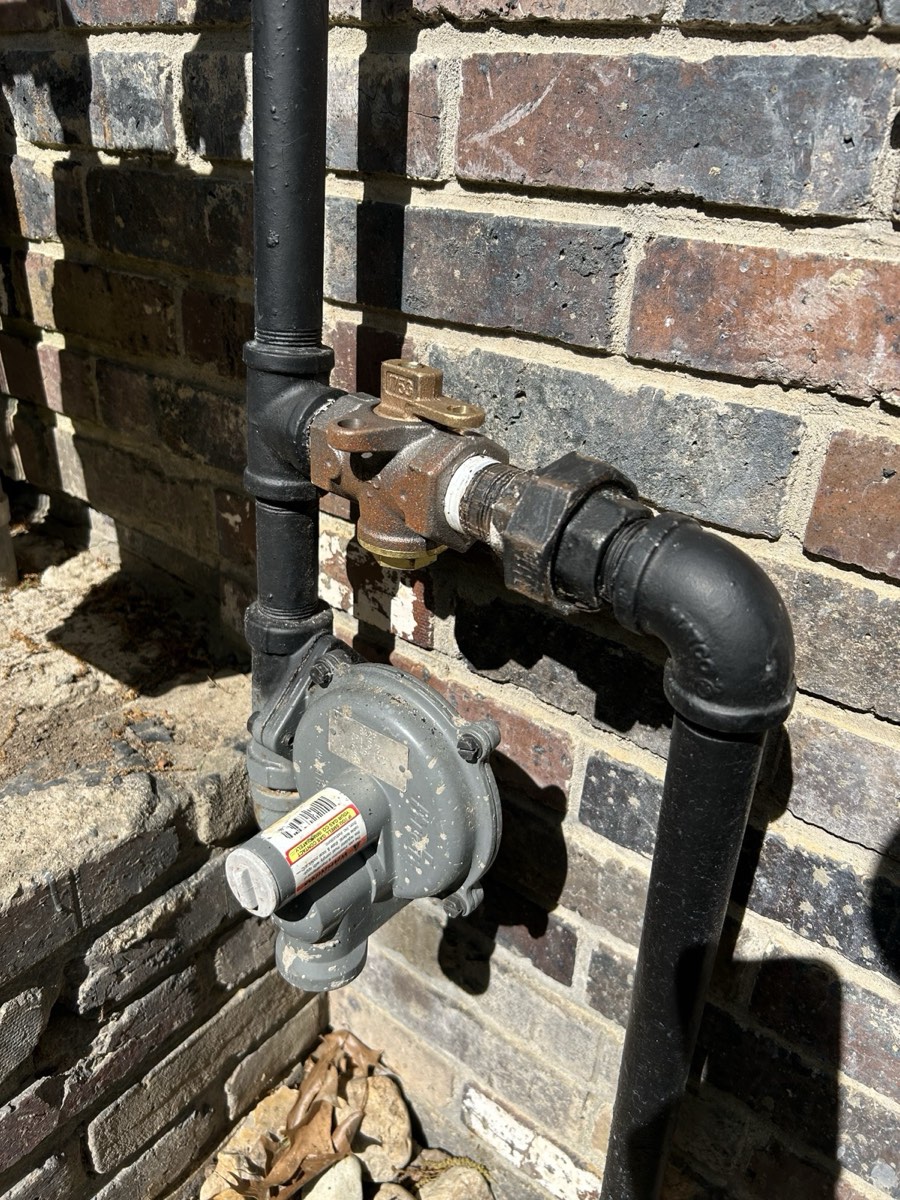
The main shutoff valve is usually near the gas meter, outside the house. It's typically a rectangular valve — when the handle is parallel to the pipe, gas is flowing; turned a quarter-turn so it's perpendicular, the gas is off. If you've never located yours, walk out and find it now, before you ever need it in a hurry.
Recognize the smell and the sound
Natural gas is odorless on its own; utilities add a chemical called mercaptan that gives it a distinct rotten-egg smell specifically so leaks are noticeable. A hissing sound near an appliance connection, dead or dying houseplants near a buried line, or bubbling in a wet spot in the yard are also worth paying attention to.
Do a visual check, hands off
You can look at exposed gas connections behind a range or dryer for obvious rust, corrosion, or a kinked flex connector. Looking is fine. If anything looks off, or you're not sure, that's the point where you stop and call a plumber rather than tightening a fitting yourself.
What Should You Never Touch Yourself?
Any point where gas pipe connects, joins, or terminates is off-limits for a homeowner, full stop. The National Fire Protection Association attributes roughly 4,200 U.S. home fires a year to natural gas leaks, most tracing back to a failed connection rather than the pipe itself (NFPA, 2024).
Below is a straightforward do/don't breakdown for a Hot Springs homeowner.
Safe for homeowners
- Knowing the location of the main gas shutoff valve
- Recognizing the smell of gas and the sound of a hiss
- Visually inspecting exposed connectors for obvious rust or damage
- Calling the gas utility or a licensed plumber when something seems wrong
- Keeping appliance vents and gas meters clear of debris and vegetation
Never DIY
- Connecting or disconnecting a gas appliance
- Extending, capping, or rerouting any gas line
- Tightening, loosening, or replacing a gas fitting or valve
- Attempting to locate a leak yourself with soapy water on a line under pressure
- Restarting a pilot light or appliance after a suspected leak, before it's been cleared
- Any work behind a wall, under a slab, or underground involving the gas supply
What Do You Do If You Smell Gas?
The U.S. Consumer Product Safety Commission recommends leaving the building immediately if you smell gas, rather than searching for the source or opening windows on your way out (CPSC, 2023). Getting everyone out safely comes before troubleshooting.
Don't flip light switches, light a match, or use your phone inside the house — any spark is a real risk in a gas-filled space. Once you're outside and at a safe distance, call your gas utility's emergency number, then call a licensed plumber to inspect and repair the line once the utility clears the property.
What Does a Professional Gas Line Job Actually Involve?
A code-compliant gas line repair follows a set sequence every time: isolate the line, replace or repair the failed section with approved materials, then pressure-test the whole run before it's ever reconnected to an appliance. Skipping any one of those steps is exactly what makes DIY gas work risky.
We isolate the affected section, use black iron pipe or CSST rated for the application, and join it with the correct fittings and sealant — not household plumber's tape, which isn't rated for gas. Once the repair is made, we pressurize the line and monitor it to confirm there's no drop in pressure, which is the only reliable way to know a joint is actually sealed.
For new installations — a line to a range, a fireplace, a tankless water heater, or an outdoor grill — we size the pipe to the appliance's BTU demand, run it along a safe route, and pull the permit before covering any of it up. The inspection at the end isn't a formality; it's the step that confirms everything we did meets code.
How Do You Know If Your Gas Line Needs Repair?
Beyond the smell of gas, a few other signs point to a line that needs attention: a pilot light that won't stay lit, an unexplained rise in your gas bill, or discolored, dying vegetation in a straight line across the yard where a buried line runs. Any of those is worth a call rather than a wait-and-see approach.
Corroded or visibly damaged flex connectors behind appliances are another common culprit, especially in older homes where the original connector has never been replaced. These are inexpensive to swap but should still be handled by a licensed plumber, since the connection point is exactly the spot most leaks start.