The short answer
- A soggy or unusually green strip of yard with no clear cause is one of the most common signs of a main line leak.
- Low water pressure at every fixture in the house — not just one — usually points to the main line, not a single faucet.
- A water bill that jumps with no change in household use often means water is escaping underground before it ever reaches a tap.
- Not every main line problem needs full replacement — many are fixed with a targeted spot repair once the leak is located.
The main water line runs from your meter to your house, usually a few feet underground, and it is easy to forget about until something goes wrong. Because it is buried, most problems show up indirectly first — in the yard, on the water bill, or in how the water behaves inside the house. Knowing what to look for in your Hot Springs yard can catch a small leak before it becomes a much bigger repair.
None of these signs need to send you into a panic. A soggy spot or a slow pressure drop is worth a call, not an emergency. Below are the signs Bowen Plumbing sees most often in Hot Springs yards, what they usually mean, and how we decide between a spot repair and a full main water line replacement.
What Does a Soggy or Green Patch in Your Yard Mean?
A wet or unusually lush strip of grass with no rain, sprinkler, or drainage explanation is one of the clearest signs of a leaking main line. Escaping water saturates the soil above the pipe and feeds the grass roots directly, which is why that patch often stays greener and grows faster than the lawn around it.
The location often lines up with the path between your meter and the house, though water can also travel sideways through soil before surfacing, so the wet spot is not always directly above the break. If the ground there feels spongy underfoot or stays damp for days after the last rain, that is a strong reason to have the line checked.
- A patch of grass that is greener or grows faster than the rest of the yard
- Ground that feels soft, spongy, or squishy when you walk on it
- Standing water or mud with no recent rain or irrigation running
- A damp area that follows a rough line from the meter toward the house
Is a High Water Bill a Sign of a Main Line Leak?
A water bill that climbs with no change in your household's usage is a common early warning of a main line leak, since water lost underground still runs through the meter. If nobody has added a new appliance, guest, or garden habit, and the bill still jumped, the line between the meter and the house is worth checking.
A simple check you can do yourself: turn off every fixture and appliance in the house, then look at the low-flow indicator on your meter, usually a small triangle or dial. If it is still moving with nothing running, water is leaving your system somewhere on your side of the meter. That does not confirm the main line specifically, but it does confirm a leak is present and worth locating.
Why Is My Water Pressure Low Throughout the Whole House?
Low pressure at every fixture in the house, rather than just one, usually points to the main line instead of a single faucet or valve. When the line is leaking, corroded, or partially blocked, less water makes it to the house overall, and every tap, shower, and appliance feels the drop at the same time.
It is worth ruling out the simple explanations first. If only the kitchen sink or one shower runs weak, that is more likely a clogged aerator or a fixture-level issue, not the main line. But if pressure has dropped house-wide and gradually, especially alongside a soggy patch or a rising bill, the line is the more likely cause.
Older galvanized lines are especially prone to this, since decades of mineral buildup can narrow the inside of the pipe even without an active leak. If your home still has its original galvanized service line, gradual pressure loss over months or years is a common pattern we see on leak detection calls around Hot Springs.
What Does It Mean If You Hear Running Water With Everything Off?
The sound of running or trickling water when every fixture in the house is off is a direct sign that water is moving somewhere it should not be. That sound can come from inside a wall, under a slab, or from the buried main line itself, especially if you notice it most near the meter or along the line's path outside.
This one is easy to miss because it often only shows up in a quiet house, late at night or early morning. If you hear it near an exterior wall or out by the meter box, that is a good clue the leak is on the main line rather than inside your plumbing. Either way, it means water is escaping and worth tracking down.
Can a Sinkhole or Settling Ground Mean a Main Line Break?
A small sinkhole, sunken area, or settling ground along the line's path is often a sign of a more advanced main line break, since escaping water can wash out the soil supporting the ground above it. This tends to show up later than a soggy patch, after a leak has been running for a while.
If you notice the ground near your driveway, walkway, or meter box starting to dip or crack, that is a sign the problem has progressed and is worth addressing sooner rather than later. Left alone, settling ground can eventually affect a driveway, patio, or even a foundation edge if the line runs close enough to the house.
- A small dip, depression, or soft spot in the yard that was not there before
- Cracking or shifting in a nearby driveway, sidewalk, or patio slab
- Ground that sinks slightly when you walk or drive over it
- A sinkhole forming near the meter box or along the suspected pipe path
Do You Need a Repair or a Full Replacement?
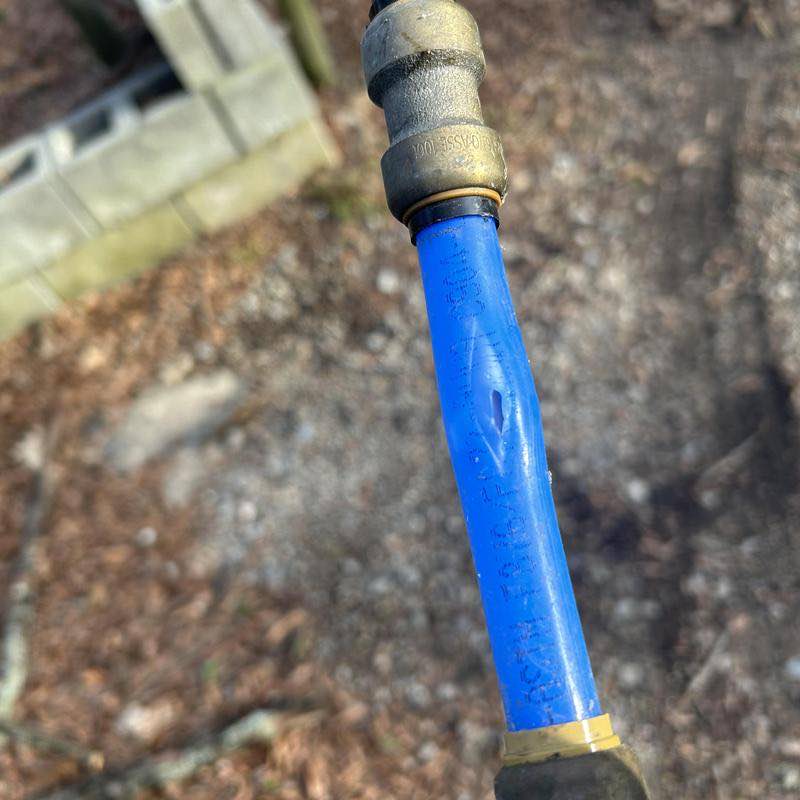
Most main line problems in Hot Springs are fixed with a targeted spot repair, not a full replacement, once we locate the exact spot where the pipe has failed. Whether a repair or replacement makes more sense depends on the pipe's material, age, and how many separate problem spots it has.
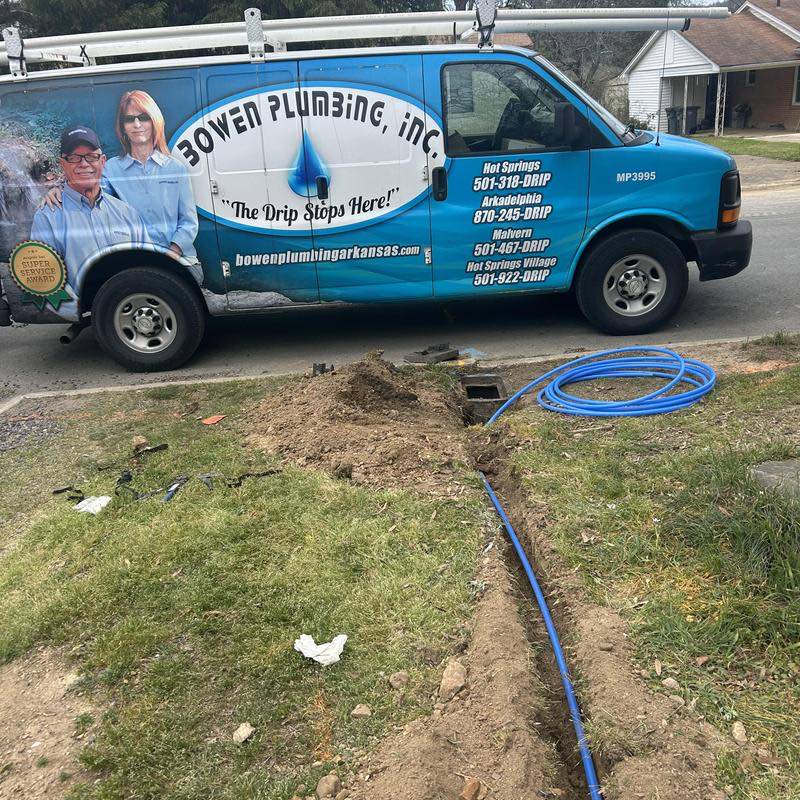
A single break or leak in an otherwise sound line, especially copper or PEX, is usually a spot repair: we dig only at the marked location, replace the damaged section, and restore the yard. Older galvanized lines that are corroding from the inside, or lines with a history of repeat leaks, often make more sense to replace outright, since another leak nearby is likely within a year or two.
We locate the leak first using leak detection equipment so we know exactly where and how bad the problem is before recommending either option. That means you get a straight answer based on what we actually find, not a guess, and digging stays limited to the area that needs it.
What Should You Do If You Notice These Signs?
If you spot a soggy patch, a bill that jumped, or pressure that has dropped everywhere in the house, the next step is having the line tested rather than waiting to see if it gets worse. A leak that is caught early is almost always a smaller, cheaper repair than one that has had months to erode the soil around it.
Bowen Plumbing has worked on main lines throughout Hot Springs, Hot Springs Village, Malvern, Bismarck, Jessieville, Pearcy, and Royal for over 40 years, so we know the local ground and how these lines tend to fail here. Call us and we will locate the problem, walk you through the options, and give you a flat price before anything is dug up.